Every extra mile driven, every delayed delivery, and every inefficient route quietly eats into a business’s margins. For companies managing deliveries or field operations, route planning directly impacts costs, productivity, and customer satisfaction.
Yet many businesses still rely on manual planning or basic mapping tools that are not built to handle real-world routing complexities. As per ORTEC, 22% of companies point to inefficient routing and unnecessary mileage as a major driver of higher delivery costs. This makes route optimization a critical operational priority rather than an optional upgrade.
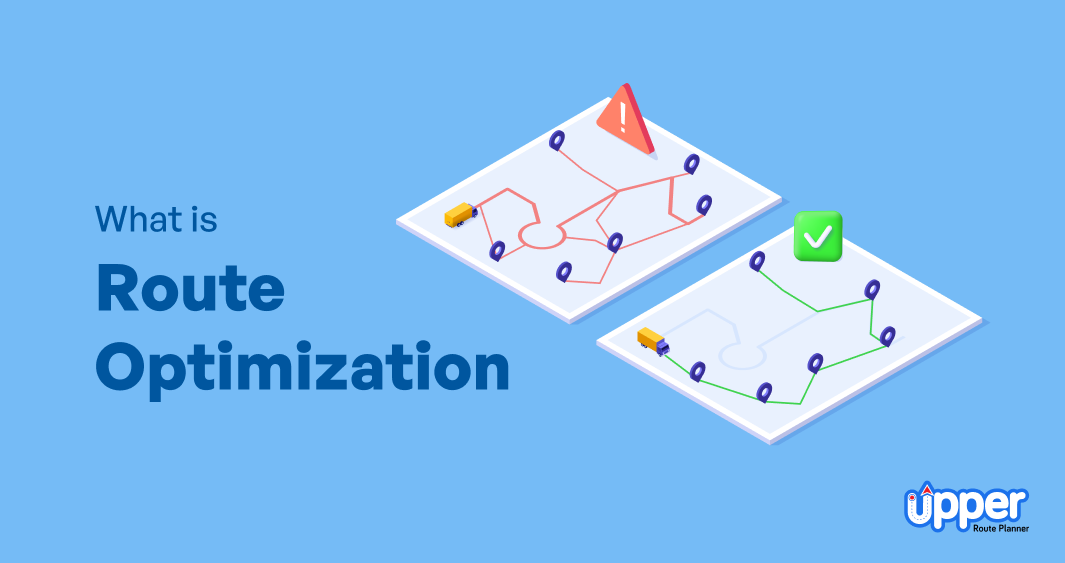
Route optimization is the process of determining the most efficient routes by accounting for variables such as distance, traffic conditions, delivery time windows, vehicle capacity, and stop priorities.
When done right, it helps businesses reduce operating costs, improve on-time performance, and make better use of drivers and vehicles. In contrast, manual route planning often results in longer travel times, excess mileage, and inconsistent service levels.
In this guide, we break down what route optimization is, how it works, and why it matters for modern businesses. You will learn the key benefits of route optimization, how it compares to manual route planning, the common challenges businesses face, and the role of route optimization software in addressing them.
Table of Contents
- What is Route Optimization?
- How Does Route Optimization Work?
- Common Route Optimization Challenges and How to Overcome Them
- 6 Key Benefits of Route Optimization
- KPIs to Track for Measuring Route Optimization Success
- Top 5 Route Optimization Software for Different Business Needs
- Real-World Examples of Successful Route Optimization Implementations
- Optimize Routes in Seconds with Upper Route Planner
- FAQs
What is Route Optimization?
Route optimization is the process of planning the most efficient paths for vehicles or field workers to complete multiple stops while minimizing time, distance, fuel costs, and operational effort.
Instead of relying on manual planning or static maps, route optimization uses data-driven logic to determine the best possible sequence of stops and routes.
At its core, route optimization considers multiple variables at the same time. These can include delivery locations, traffic conditions, vehicle capacity, service time at each stop, driver schedules, and customer time windows.
By analyzing all these factors together, route optimization ensures that routes are not just the shortest but also the most practical and cost-effective for real-world operations.
This is done through route optimization software that helps businesses avoid inefficient routing, such as unnecessary backtracking, uneven workload distribution, or delayed deliveries.
It enables teams to complete more jobs in less time while maintaining predictable schedules and better service levels.
Route optimization software considers key inputs such as:
- Location data: depots, customer addresses, and service stops
- Vehicle details: capacity limits, type, and fuel efficiency
- Time constraints: delivery windows, work hours, service duration, and breaks
- Road conditions: traffic, closures, restrictions, and turn limitations
- Business rules: job priority, technician skills, and customer requirements
Using route optimization algorithms, the software processes these variables to minimize travel time, distance, fuel usage, and operational costs, while ensuring routes remain realistic and compliant.
Now that you have a basic understanding of route optimization, let’s give you a full comparison between manual route planning and automated route optimization, and how they are different from one another.
Manual vs Automated Route Optimization
Automated route optimization is a step beyond manual route planning, with more control and better efficiency. Here’s how these two concepts different fundamentally:
| Aspect | Manual Route Planning | Automated Route Optimization |
|---|---|---|
| Approach | Static, predetermined path based on basic factors | AI-powered, continuous optimization with real-time updates |
| Data Inputs | Distance, basic waypoints | All optimization inputs plus predictive analytics and historical patterns |
| Real-Time Adjustments | No | Yes, continuous |
| Complexity Handling | Simple routes only (2–5 stops) | High complexity (100+ stops, multiple vehicles) |
| Time Required | Hours to plan | Seconds to plan and reoptimize |
| Optimization Goals | Shortest distance | Multi-objective optimization with priority weighting |
| Scalability | Poor – breaks down quickly | Excellent – scales with business growth |
| Cost Savings | 0–5% | 30–40% |
Route planning lays the groundwork, but route optimization builds upon it to deliver measurable business outcomes. Think of planning as drawing a map, while optimization is finding the smartest way to navigate it under real-world conditions.
This was all about a direct comparison between two different routing techniques. Next, we will explain how route optimization actually works.

See it in action
Want to See Smart Route Optimization in Action?
Reading about optimization is one thing; seeing it on your own routes is another. Explore how Upper processes stops, constraints, and real-world conditions to generate smarter routes automatically.

How Does Route Optimization Work?
Route optimization software uses a multi-layered approach to transform raw data into actionable, efficient routes. Here’s how the process works:
Data Collection and Input
The software gathers comprehensive information, including delivery addresses, customer time windows, vehicle capacities, driver schedules, historical traffic patterns, and current road conditions. This data forms the foundation for optimization calculations.
Constraint Analysis
The system identifies and processes all constraints that must be satisfied, driver work hour limits, vehicle weight restrictions, customer-specific requirements, delivery time windows, and priority levels. These constraints define the boundaries within which optimization must occur.
Algorithm Processing
Advanced algorithms (such as genetic algorithms, simulated annealing, or machine learning models) evaluate millions of possible route combinations to identify the most efficient sequences.
The software balances multiple objectives simultaneously: minimizing distance, reducing travel time, lowering fuel costs, and maximizing on-time deliveries.
Real-Time Optimization
As conditions change throughout the day, traffic delays, new orders, driver availability, or vehicle breakdowns, the software dynamically adjusts routes. This ensures routes remain optimal even when circumstances shift.
Route Distribution
Optimized routes are instantly distributed to drivers via mobile apps, complete with turn-by-turn navigation, stop sequences, customer notes, and estimated arrival times. Drivers receive automatic updates when routes change.
Performance Tracking
The system continuously monitors route execution, capturing data on actual vs. planned performance, delivery completion rates, driver adherence, and customer feedback. This data feeds back into the optimization engine to improve future routing decisions.
Common Route Optimization Challenges and How to Overcome Them
1. Manual Route Planning Doesn’t Scale
Challenge: Planning routes manually takes hours and breaks down as stops, vehicles, and constraints increase.
Solution: Route optimization automates complex planning in seconds using data-driven algorithms.
2. Inefficient Routing Increases Fuel and Operating Costs
Challenge: Poor route sequencing leads to unnecessary mileage, detours, and excess fuel consumption.
Solution: Route optimization minimizes distance and idle time to reduce fuel and operating costs.
3. Difficulty Managing Multiple Vehicles and Stops
Challenge: Coordinating routes across multiple vehicles becomes too complex for spreadsheets or basic maps.
Solution: Route optimization solves multi-vehicle, multi-stop routing while balancing schedules and capacity.
4. Missed Delivery Time Windows
Challenge: Manual planning struggles to meet narrow delivery or service time commitments consistently.
Solution: Route optimization accounts for time windows, service duration, and traffic to ensure on-time arrivals.
5. Routes Fail When Real-World Conditions Change
Challenge: Traffic delays, cancellations, breakdowns, or last-minute orders disrupt planned routes.
Solution: Route optimization dynamically adjusts routes in real time without impacting the full schedule.
6. Poor Driver and Fleet Utilization
Challenge: Uneven workloads reduce productivity and limit how much work fleets can handle.
Solution: Route optimization balances routes so drivers complete more stops without longer hours.
Since you know the challenges and solutions of route optimization, we will proceed to our next topic of discussion, the benefits of route optimization.
6 Key Benefits of Route Optimization
Route optimization delivers measurable improvements across multiple aspects of your operations. Here’s what you can expect:
1. Cut Down on Fuel Costs and Save Money
Route optimization eliminates unnecessary mileage and significantly reduces fuel consumption across daily operations. According to fleet management studies, businesses save an average of $1,400 per vehicle annually on fuel costs alone.
By minimizing detours, reducing idling time, and planning efficient multi-stop sequences, you directly impact your bottom line.
2. Deliver Faster and Improve Customer Satisfaction
Speed matters. 85% of customers say that they won’t return to a business after just one poor delivery experience.
Route optimization ensures your drivers take the fastest routes and arrive within promised time windows. This translates to higher on-time delivery rates, better customer reviews, and stronger brand loyalty.
3. Do More with Less and Maximize Productivity
Optimized routes enable drivers to complete more stops per day without working longer hours. This means you can handle growing delivery volumes without immediately expanding your fleet or hiring additional drivers.
Real-world implementations show businesses completing the same workload. For example, an Upper’s essential meal delivery business client saved 120 km after adopting route optimization.
4. Reduce Vehicle Wear and Tear and Extend Fleet Life
Fewer miles driven means less maintenance. Route optimization reduces annual vehicle mileage by 10-20%, directly extending vehicle lifespan and decreasing maintenance costs by approximately $1,000-$1,500 per vehicle yearly. Lower wear and tear also means fewer breakdowns and less downtime.
5. Slash Your Carbon Footprint and Go Greener
Optimized routes mean fewer emissions. Analysis by Accenture, in collaboration with the World Economic Forum, indicates that digital routing solutions in mobility can reduce greenhouse gas emissions by up to 20% by 2050.
For businesses committed to sustainability, route optimization offers a straightforward way to demonstrate environmental responsibility while cutting costs.
6. Stay Competitive
In today’s market, customers expect fast, reliable service at competitive prices. Route optimization gives you the operational efficiency to offer better service levels while maintaining healthier profit margins, helping you win and retain customers against competitors still using manual methods.
With this, we sum up the benefits of route optimization. Moving forward, we will be listing down the KPIs to measure route optimization success, alongside the top 5 route optimization software you can explore based on your needs.
KPIs to Track for Measuring Route Optimization Success
Effective route optimization requires tracking the right metrics. Here are the key performance indicators you should monitor:
On-Time Delivery Rate
Percentage of deliveries completed within promised time windows. Target: 95% or higher. This directly reflects customer satisfaction and operational reliability.
Cost Per Delivery
Total operational costs divided by deliveries completed. Track this monthly to measure efficiency improvements and identify cost-reduction opportunities.
Average Route Duration
Mean time required to complete routes. Decreasing route duration while maintaining service quality indicates improved efficiency.
Fuel Consumption Per Mile/Kilometer
Fuel used relative to distance traveled. Optimized routes should show consistent improvement in fuel efficiency over time.
Driver Utilization Rate
Percentage of driver working hours spent actively delivering vs. idle or in transit. Higher utilization indicates better route density and planning.
Average Stops Per Route
Number of successful deliveries or service calls completed per route. Increasing stops per route without extending hours demonstrates optimization effectiveness.
First-Time Delivery Success Rate
Percentage of deliveries completed on the first attempt. Failed deliveries create costly reattempts and hurt customer satisfaction.
Customer Satisfaction Score (CSAT)
Direct feedback on delivery experience. Route optimization should correlate with improving CSAT scores.
Route Plan vs. Actual Variance
The difference between planned and actual route execution. Lower variance indicates more accurate planning and fewer disruptions.
Return on Investment (ROI)
Cost savings and revenue improvements from optimization versus software investment. Most businesses see positive ROI within 3-6 months.
Regularly monitoring these KPIs helps you quantify optimization benefits, identify areas for improvement, and make data-driven decisions about routing operations.
See it in action
Track the KPIs That Actually Matter with Upper
Route optimization isn’t just about better routes; it’s about measurable improvement. Upper automatically tracks key routing KPIs like on-time delivery, route variance, and fuel efficiency so teams can see progress over time.
Top 5 Route Optimization Software for Different Business Needs
With the fundamentals of route optimization covered, let’s look at the software that helps businesses apply it in real-world operations.
The table below compares the top 5 route optimization software and their ideal use cases.
| Software | G2 Rating | Pricing | Best Suited For |
|---|---|---|---|
| Upper | 4.8/5 | $40/user/month | Fast multi-stop route optimization + dispatch, without complexity |
| OptimoRoute | 4.8/5 | $35/driver/month | Teams that care about scheduling and route planning together |
| Onfleet | 4.6/5 | $599/month | Last-mile delivery operations needing strong dispatch and delivery tracking |
| Routific | 4.8/5 | $150 for 1,000 orders | Simple route optimization with a pay-as-you-go model |
| Route4Me | 4.6/5 | Custom pricing | Larger or growing teams needing route optimization at scale |
Real-World Examples of Successful Route Optimization Implementations
Case Study 1: Northern Express Logistics
Northern Express Logistics is a family-owned transportation company focused on last-mile deliveries.
Key challenges
- Manual route planning and optimization
- High fuel usage and longer delivery times
- No real-time visibility into drivers
How Upper helped
- Automated most route planning workflows
- Enabled real-time driver tracking
- Simplified route manifests and dispatch
Results
- 3× increase in daily deliveries
- Doubled driver productivity
- Lower operational costs and reduced environmental impact
Case Study 2: Chef Nicole Miami
Chef Nicole Miami is a South Florida–based healthy meal delivery service.
Key challenges
- Time-consuming manual route planning
- Duplicate addresses causing errors
- No flexibility for last-minute changes
How Upper helped
- Streamlined planning with Excel imports
- Automatically handled duplicate addresses
- Allowed quick route edits and reassignments
Results
- Saved 10 hours of office work per week
- Expanded delivery to two new suburbs
- Handled 62% more orders with 46% higher productivity
Case Study 3: Eco Medical
Eco Medical delivers medical supplies and relies on timely, accurate deliveries.
Key challenges
- Paper-based routing and duplicated work
- No real-time delivery updates
- Slow, manual route planning
How Upper helped
- Fully automated route planning and scheduling
- Provided live driver tracking
- Enabled digital proof of delivery
Results
- 100% digitized delivery operations
- 82% boost in productivity
- 76% reduction in planning time and elimination of paper errors
Optimize Routes in Seconds with Upper Route Planner
Route optimization isn’t just about finding the shortest path, it’s about planning smarter routes that save time, fuel, and effort every single day. Manual planning may work at a small scale, but as routes, stops, and customer expectations grow, inefficiencies add up quickly. This is why daily route optimization becomes essential for businesses managing regular deliveries or service visits.
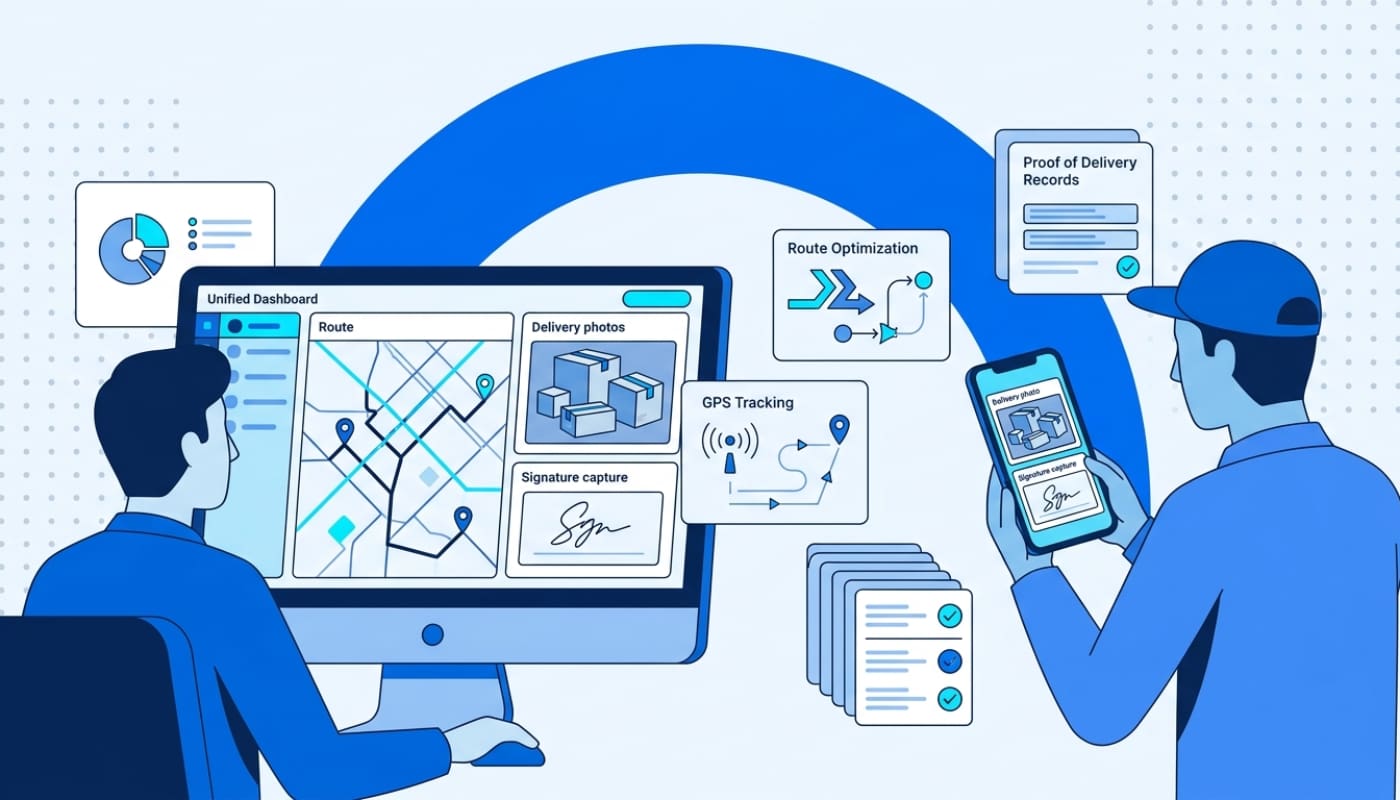
Upper Route Planner replaces manual guesswork with intelligent automation. In just seconds, teams can generate optimized multi-stop routes based on real-world factors like distance, traffic, and stop order, helping drivers complete more jobs with fewer miles.
Upper makes route optimization simple and practical:
- Instant multi-stop route optimization with automatic stop sequencing
- Bulk import and one-click planning to save hours of daily effort
- Smarter, real-world routes designed for how drivers actually operate
Once routes are dispatched, Upper keeps operations fully visible and under control:
- Live driver tracking and route progress monitoring
- Automated ETAs and customer notifications
- Proof of delivery for accountability and record-keeping
By reducing unnecessary travel and improving daily efficiency, businesses using Upper often cut fuel costs by up to 40% while increasing deliveries or job completions per driver. Whether you manage a small delivery operation or a growing field team, Upper helps you optimize routes faster, operate smoothly, and scale with confidence. Book a demo today!
Frequently Asked Questions
Route optimization methods include various algorithmic approaches such as the nearest neighbor algorithm, genetic algorithms, simulated annealing, and machine learning models.
These methods process routing variables to generate near-optimal solutions for complex multi-stop routing problems.
The short answer is Yes! But we do not recommend it beyond small operations.
Manual planning quickly becomes slow, inaccurate, and hard to adjust as routes, stops, and constraints increase. Route optimization software handles this complexity far more efficiently.
Route management encompasses the entire process of planning, executing, and monitoring vehicle routes.
It includes route planning, driver scheduling, dispatch, real-time tracking, performance analysis, and continuous optimization to ensure efficient operations and timely deliveries.
Google Maps provides directions and basic route planning between multiple stops, but it doesn’t automatically optimize the stop sequence for efficiency.
Users must manually arrange stops in the best order. For businesses needing optimized multi-stop routes with constraints like time windows and vehicle capacity, dedicated route optimization software is necessary.
Several free route planners exist for basic routing needs, including Google Maps, MapQuest, and RouteXL (limited free version).
However, free tools typically lack advanced optimization features, real-time updates, capacity constraints, proof of delivery, and integration capabilities that businesses require for professional operations.
Businesses typically save 20–30% on fuel costs through route optimization.
For a fleet of 10 vehicles traveling 25,000 miles annually at $3.50/gallon and 10 MPG, this translates to approximately $21,000–$31,500 in annual fuel savings.
Actual savings depend on your current routing efficiency, fleet size, and fuel prices.
Yes, significantly. Route optimization reduces unnecessary driving time and mileage, enabling drivers to complete 20–30% more stops per day.
By eliminating guesswork and providing clear navigation, drivers spend more time delivering and less time planning or backtracking.
Route optimization ensures consistent on-time arrivals, provides accurate delivery ETAs, reduces late or missed deliveries, enables real-time customer notifications, and allows businesses to handle more orders reliably.
This leads to higher customer satisfaction scores, better reviews, and increased customer retention rates.
Delivery services, field services, waste management, retail, healthcare, emergency services, and any business that requires multi-stop routing can benefit significantly from route optimization.
Route optimization solves routing challenges that manual planning can’t handle at scale:
- Multiple-stop route complexity: Finds the most efficient route without testing millions of combinations.
- Multi-vehicle coordination: Optimizes routes across vehicles while respecting capacity and schedules.
- Capacity and load limits: Prevents overloading and avoids inefficient loading sequences.
- Delivery time windows: Ensures on-time arrivals while reducing idle time.
- Real-time disruptions: Adapts routes when traffic, delays, or last-minute changes occur.
- Fleet utilization and growth: Helps teams do more with existing resources before scaling up.