
Table of Contents
- What Is Vehicle Idling?
- The True Cost of Vehicle Idling for Delivery Fleets
- How to Reduce Vehicle Idling in Your Fleet
- Common Challenges With Reducing Fleet Vehicle Idling
- Vehicle Idling Regulations Fleet Operators Should Know
- Cut Vehicle Idling Costs With Optimized Routing From Upper
- Frequently Asked Questions on Vehicle Idling
Your trucks are burning fuel while standing still. A single idling delivery truck burns roughly 0.8 gallons per hour, and most fleet operators have no idea how much that adds up to across their fleet.
As per Track Your Trucks, the average cost of vehicle idling can be as high as $20 billion annually. For delivery fleets, the problem is worse than most industries because multi-stop routes create dozens of idle moments every day: waiting at loading docks, sitting at customer locations, queuing in urban traffic, and running the engine during paperwork between stops.
Vehicle idling isn’t just a fuel problem. It accelerates engine wear, triggers regulatory fines in 30+ states, and inflates maintenance costs by thousands per vehicle per year. The good news? It’s also one of the most fixable problems in fleet operations.
In this guide, you’ll learn:
- What vehicle idling actually costs your fleet (beyond just fuel)
- Why delivery operations face unique idling patterns
- A practical framework for reducing idle time through route optimization, driver protocols, and monitoring
- How to stay compliant with tightening anti-idling regulations
What Is Vehicle Idling?
Vehicle idling is when the engine runs while the vehicle is stationary and not performing useful work. For fleet operations, the distinction between necessary and excessive idling matters. Sitting at a red light is necessary. Running the engine for 10 minutes while a driver delivers a package to the front door is not.
For example, a delivery driver making 30 stops per day might idle for 2-3 minutes at each stop while the engine stays running. That’s 60-90 minutes of unnecessary idling daily, burning roughly a gallon of fuel for nothing. Across a 10-truck fleet, that’s 10 gallons wasted every day.
Types of Fleet Vehicle Idling by Category
Understanding where your idle time comes from helps target reduction efforts:
- Operational idling: Loading/unloading, waiting for signatures, traffic congestion. Partially controllable through better routing and scheduling
- Habitual idling: Engine running during breaks, between deliveries, during calls. Fully controllable through driver protocols and accountability
- Seasonal idling: Running climate control in extreme temperatures. Partially controllable with auxiliary equipment and scheduling adjustments
- Route-driven idling: Poor sequencing causing early arrivals, unnecessary congestion exposure, and excessive time between stops. Fully controllable through route optimization
Not all idling is avoidable. But the majority of excessive idling in delivery fleets falls into habitual and route-driven categories, both directly controllable with the right approach.
The True Cost of Vehicle Idling for Delivery Fleets
Vehicle idling costs more than most fleet managers realize. Here are four cost categories that make idling one of the largest hidden expenses in delivery operations:
Calculate Fuel Waste From Unnecessary Idle Time
A single idling truck burns roughly 0.8 gallons per hour. At $4 per gallon, one hour of daily unnecessary idling costs $1,168 per vehicle annually. A 10-truck fleet idling 2 hours daily wastes over $23,000 per year in fuel alone.
Fuel represents 30-40% of total fleet operating costs. It’s the largest controllable expense in most delivery operations, and idling inflates it with zero productive output.
Account for Accelerated Engine Wear and Maintenance Costs
Idling causes incomplete fuel combustion. That leads to carbon buildup, increased engine deposits, and faster component degradation. One hour of idling produces engine wear equivalent to driving roughly 30 miles.
Fleets with high idling rates report $2,000+ per vehicle annually in additional maintenance: shortened oil change intervals, accelerated brake wear, and more frequent component replacements. Over a 5-year vehicle lifespan, that’s $10,000 in avoidable maintenance per truck.
Factor in Regulatory Fines and Compliance Exposure
Over 30 states in the USA have anti-idling laws. Limits typically range from 3 to 5 minutes. Fines start at $100-$500 per violation and escalate with repeat offenses.
Urban delivery operations face the highest exposure. Frequent stops in regulated zones mean more opportunities for violations. Major cities like New York, Boston, and jurisdictions across California enforce aggressively.
Measure Environmental Impact and Growing Stakeholder Pressure
Idling produces roughly 11 pounds of CO2 per hour. Across a fleet, that adds up to tons of unnecessary emissions annually. Customer and regulatory pressure for verifiable emissions reduction is growing.
Fleet sustainability reporting increasingly requires idling metrics. Companies with sustainable fleet management programs track and reduce idling as a core environmental KPI. Ignoring idling data puts you behind competitors who can demonstrate measurable environmental improvements to customers and partners.
When you stack fuel waste, maintenance acceleration, regulatory exposure, and environmental costs, the true idling costs for your fleet become staggering. Vehicle idling is one of the largest hidden expenses in fleet operations. The good news: it’s also one of the most fixable, especially when paired with fleet management software that gives you the data to act.

See it in action
Cut Your Fuel Costs by 25-40% with Optimized Routing
Fewer miles and less time in traffic mean less fuel burned, period. Upload your stops and get optimized routes in under a minute.

How to Reduce Vehicle Idling in Your Fleet
Reducing vehicle idling requires a layered approach. Start with the highest-impact lever, route optimization, then layer in driver protocols, monitoring, and technology solutions. Here are six strategies for fleet idle time reduction, ranked by impact:
Optimize Routes to Eliminate Route-Driven Idle Time
This is the single highest-impact lever for reducing vehicle idling in delivery fleets. Shorter, more efficient routes mean less time in traffic, which is the biggest source of idle time for multi-stop operations. Route optimization for fuel cost reduction cuts congestion exposure by routing drivers around gridlock.
Time-window-aware scheduling aligns arrival times with customer availability. This eliminates the pattern where drivers arrive early and idle at stops waiting for windows to open. Workload balancing distributes stops evenly so no driver has idle gaps between deliveries.
Route optimization alone reduces vehicle idling by 8-10%, and that’s before any driver behavior changes or technology interventions.
Establish Clear Engine-Off Rules and Driver Anti-Idling Protocols
Define specific scenarios where engine shutoff is required: deliveries over 30 seconds, loading dock waits, breaks, and paperwork. Post anti-idling guidelines in every vehicle and review during onboarding.
Most drivers don’t realize how much vehicle idling costs their fleet. Share the per-vehicle numbers. Frame it as money the business can reinvest in compensation, equipment, or growth.
Consider incentive programs tied to idling targets. Drivers who cut idle time by 20% in a month earn a bonus.
Monitor Idle Time Per Driver and Per Route With GPS Data
Use GPS fleet tracking to measure idle time by driver, route, and time of day. Identify patterns: which drivers idle most? Which routes have the highest idle rates? What times of day spike?
Set benchmarks. Industry standard for acceptable idling is under 15-20% of total engine-on time. Best-in-class fleets achieve under 10%.
Share idling reports with drivers as coaching tools. Focus on systemic causes (route-driven idling) before targeting individual behavior.
Install Automatic Engine Shutoff for High-Idle Vehicles
Aftermarket devices shut down engines after a preset idle duration, typically 3-5 minutes. ROI comes within 3-6 months through fuel savings alone. These are especially effective for fleets where vehicle idling costs are concentrated in habitual patterns. Tracking engine hours helps you identify which vehicles accumulate the most idle time.
Pair shutoff devices with driver behavior monitoring data to identify which vehicles benefit most. Start with your highest-idle vehicles and expand based on results.
Plan for Seasonal Factors Without Defaulting to Engine Idling
Extreme temperatures create legitimate comfort concerns. But running the engine for 45 minutes during a lunch break isn’t the only option. Auxiliary power units or battery-powered HVAC systems handle cabin comfort without engine idling.
For delivery fleets with brief stops, sustained cabin conditioning isn’t necessary. Park in shaded areas during summer. Use engine block heaters for winter pre-departure. Set different idle targets for summer and winter months, but keep reduction efforts focused on controllable categories year-round.
Conduct Monthly Idle Audits and Quarterly Framework Updates
Compare idle metrics against baseline and targets monthly. Identify vehicles and routes that improve versus regress. Calculate monthly fuel savings from idle reduction to reinforce ROI with your team and stakeholders.
Quarterly, revise anti-idling protocols based on results. Update driver training materials with real fleet data. Adjust idle thresholds as performance improves. Use route management analytics to track trends over time and connect idle reduction directly to cost savings.
The most effective anti-idling programs layer multiple strategies. Route optimization addresses the upstream cause. Driver protocols address behavior. Monitoring provides accountability.
Start with route optimization for the fastest ROI, then build from there.
See it in action
Reduce Congestion Idling With Traffic-Aware Routing
Upper factors in real-time traffic patterns to route your drivers around gridlock, cutting the biggest source of delivery fleet idle time.
Common Challenges With Reducing Fleet Vehicle Idling
Every vehicle idling reduction initiative faces predictable obstacles. Here’s what to watch for and how to handle each one:
Overcome Driver Pushback on Engine-Off Policies
Drivers cite comfort, safety (keeping lights on), and convenience as reasons to keep idling. The pushback is understandable but addressable.
Solution: Lead with the cost data. Show per-driver idling costs and frame savings as resources the company reinvests. Start with a voluntary program. Let early adopters demonstrate that engine-off policies are manageable. Consider fuel savings bonuses for drivers who meet idle reduction targets.
Measure Idling Accurately Without Expensive Telematics Hardware
Many small fleets lack dedicated telematics and rely on fuel card data, which can’t isolate idle consumption. Without measurement, you can’t manage.
Solution: Phone-based GPS tracking apps provide idle monitoring without vehicle hardware installation. Upper’s driver app tracks location and route progress from any smartphone. Start with manual audits (ride-alongs, spot checks) while building the business case for tracking.
Balance Idling Reduction With Legitimate Operational Needs
Some idling is genuinely necessary. Refrigerated trucks must maintain temperature. Power takeoff equipment requires the engine. Climate control in extreme weather has safety implications.
Solution: Categorize idling by type and focus reduction efforts on controllable categories. Set different standards for refrigerated versus dry van operations. Don’t penalize necessary idling. Target habitual and route-driven categories where the opportunity is largest.
Maintain Momentum After the Initial Drop in Idle Time
Vehicle idling reduction programs often see strong results in month one, then regression. The novelty wears off and old habits return.
Solution: Make vehicle idling metrics part of regular fleet performance reviews, monthly, not annually. Refresh driver training quarterly with updated fleet data showing collective savings. Recognize top performers publicly. The programs that stick are the ones built into how the fleet operates daily, not treated as one-time campaigns.
Every challenge on this list has a straightforward solution. The key is treating vehicle idling reduction as an ongoing discipline, not a one-time project. Addressing fleet downtime alongside idling creates compounding efficiency gains.
Vehicle Idling Regulations Fleet Operators Should Know
Anti-idling compliance is shifting from a nice-to-have to a cost of doing business. Here’s what delivery fleet operators need to know:
Understand State and Municipal Anti-Idling Laws
Over 30 states have anti-idling regulations, with limits typically ranging from 3 to 5 minutes. Major cities enforce more aggressively: New York, California, Massachusetts, and Washington D. C. have some of the strictest rules.
Fines start at $100-$500 per violation. Repeat offenses escalate significantly. Delivery fleets operating across state lines must comply with the strictest applicable regulation in each jurisdiction.
Know the Exemptions That Apply to Your Fleet
Common exemptions include traffic conditions, operation of mechanical equipment (power takeoff, lifts), safety concerns, and extreme temperatures in some jurisdictions. Refrigerated delivery vehicles may have separate regulations.
Exemptions vary by state and city. Confirm applicability for your specific fleet type and operating zones before assuming you’re covered.
Build Compliance Into Your Standard Operations
Map your operating zones against applicable regulations. Set fleet-wide idle limits at or below the strictest jurisdiction you serve. Document compliance efforts, including training records and idle monitoring reports, for regulatory defense.
Use GPS tracking data to generate compliance reports automatically. If a violation is disputed, timestamped idle data provides evidence of your program.
Watch for Tightening Regulatory Trends
Municipalities are tightening enforcement, especially in urban delivery corridors. Electric vehicle mandates in some cities will eventually eliminate tailpipe idling for qualifying fleets. Corporate sustainability standards increasingly include fleet emissions data.
Building compliance into operations now prevents fines and positions your fleet for regulations that will only get stricter. Proactive compliance is cheaper than reactive penalty management.
Anti-idling compliance is a reality for delivery fleets operating in urban areas. The fleet operators who build it into their standard operations now avoid fines and gain a competitive advantage as regulations tighten.
See it in action
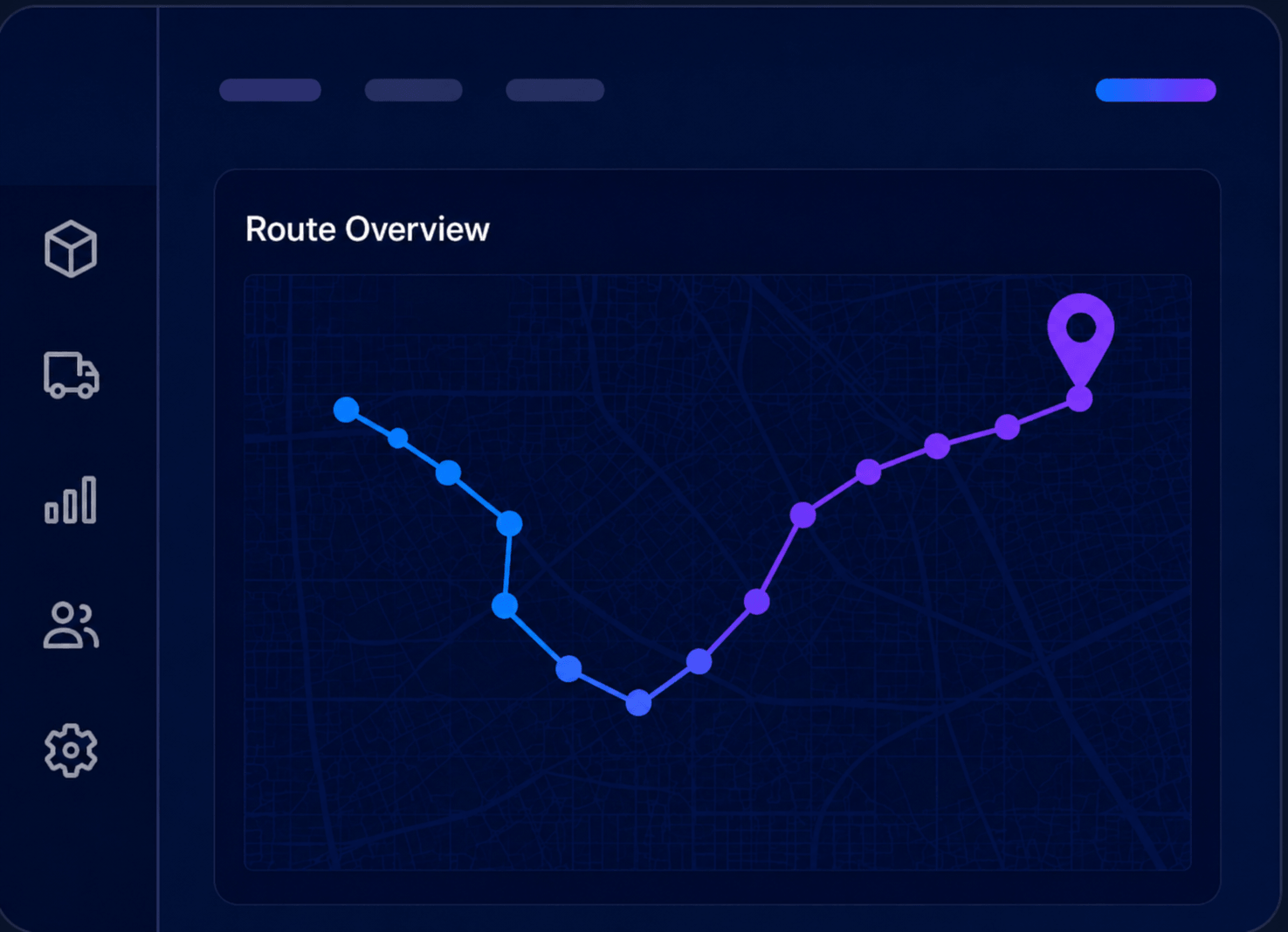
Track Every Driver’s Route Performance in Real Time
GPS tracking and smart analytics show you exactly where idle time occurs so you can coach drivers and optimize routes.
Cut Vehicle Idling Costs With Optimized Routing From Upper
Vehicle idling costs delivery fleets thousands per vehicle annually in fuel, maintenance, and compliance risk. The most effective reduction strategy starts upstream, with how routes are planned and optimized.
Upper Route Planner reduces fleet idling at the source. Optimized multi-stop routing minimizes total drive time and congestion exposure, cutting the time drivers spend sitting in traffic. Time-window-aware scheduling aligns arrivals with customer availability so drivers aren’t idling at doorsteps waiting for windows to open.
Workload balancing eliminates the idle gaps that occur when some drivers finish early while others are overloaded. Real-time GPS tracking provides the idle time monitoring data you need to measure progress and coach drivers. Smart analytics track fleet efficiency, route productivity, and driver performance, giving you the visibility to quantify your idling reduction ROI.
Whether you’re targeting a 10% vehicle idling reduction or building a comprehensive anti-idling program, Upper gives you the route optimization and fleet visibility to make it happen. Book a demo to see how Upper’s optimized routing reduces fleet idling, fuel costs, and maintenance expenses.
Frequently Asked Questions on Vehicle Idling
A typical delivery truck or van burns roughly 0.8 gallons of fuel per hour while idling. At $4 per gallon, that’s $3.20 per hour of wasted fuel. A driver who idles unnecessarily for 2 hours daily wastes over $2,300 per vehicle annually in fuel alone.
Annual idling costs depend on fleet size and idle duration. A 10-truck fleet averaging 2 hours of unnecessary daily idling wastes over $23,000 in fuel. Add $2,000 per vehicle in accelerated maintenance costs, and total annual waste can exceed $40,000 for a fleet that size.
Yes. Idling causes incomplete fuel combustion, which leads to carbon buildup, increased engine deposits, and faster wear on spark plugs, cylinders, and exhaust systems. One hour of idling produces engine wear equal to driving roughly 30 miles.
Over 30 U.S. states have anti-idling regulations limiting idle time to 3-5 minutes. Fines range from $100-$500 per violation. Delivery fleets face the highest exposure because of frequent stops in urban areas with active enforcement.
Route optimization cuts idling three ways: shorter routes mean less time in traffic congestion, time-window scheduling prevents early arrivals and wait-at-stop idling, and workload balancing eliminates idle gaps between deliveries. Fleets report 8-10% idle time reduction from route planning optimization alone.
Industry benchmarks suggest fleet idling should stay below 15-20% of total engine-on time. Best-in-class delivery fleets achieve under 10%. Track idle time per driver, per route, and per time of day to identify specific reduction opportunities.
Yes. Phone-based GPS tracking apps provide idle monitoring without vehicle hardware. Combined with route optimization software and driver anti-idling protocols, small fleets can achieve significant reductions before investing in dedicated telematics systems.