
Two delivery routes may look identical on paper but produce completely different results in the real world. One finishes ahead of schedule with lower fuel costs and higher driver productivity, while the other runs into delays, missed delivery windows, and unnecessary mileage. The difference often comes down to how effectively businesses use operational data.
Modern delivery operations generate constant streams of information, including GPS locations, traffic conditions, delivery times, driver behavior, customer preferences, and vehicle capacity data. Businesses that rely on static route planning or manual dispatching often fail to use this data effectively, leading to inefficient routes and rising operational costs.
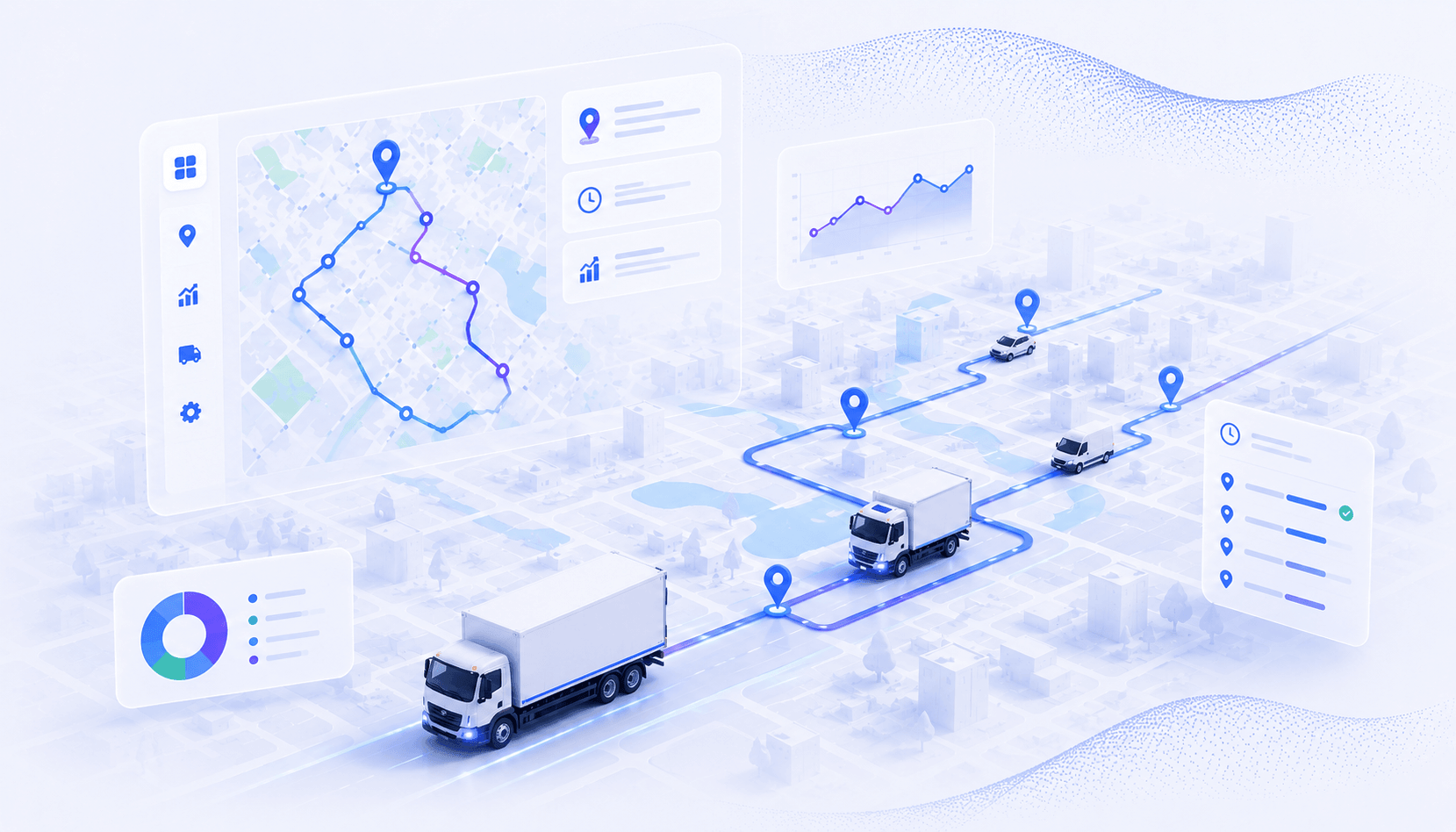
Data-driven route optimization helps businesses use real-time and historical delivery data to make smarter routing decisions. By analyzing factors such as traffic congestion, stop density, delivery windows, and fleet performance, businesses can improve route efficiency, reduce delivery costs, and increase on-time deliveries.
In this guide, we’ll explain what data-driven route optimization is, how it works, the types of data involved, and how businesses use it to improve delivery performance and scale operations more efficiently.
Table of Contents
- What Is Data-Driven Route Optimization?
- Why Data-Backed Routing Outperforms Manual Planning
- How to Optimize Routes Using Data: 6-Step Framework
- Common Challenges in Data-Driven Route Optimization
- Best Practices for Maximizing Route Data Value
- Key Metrics to Track in Data-Driven Routing
- Optimize Your Fleet Routes With Data-Driven Intelligence Using Upper
- FAQs on Data-Based Routing
What Is Data-Driven Route Optimization?
Data-based route optimization is the practice of using historical performance data, real-time inputs, and predictive analytics to plan and continuously refine delivery routes. Instead of relying solely on dispatcher intuition or static maps, it feeds measurable fleet data into routing algorithms to produce routes that get more efficient over time. This approach matters because it turns every completed route into a learning opportunity for the next one.
How Data-Driven Route Optimization Works
The mechanics behind data-driven routing follow a four-stage cycle:
- Collects data from GPS tracking, driver apps, delivery timestamps, and traffic APIs
- Analyzes patterns including recurring delays, stop durations, traffic windows, and customer availability trends
- Feeds insights into routing algorithms that adjust stop sequences, driver assignments, and timing based on actual performance
- Creates a continuous improvement loop where each dispatch cycle refines the next through a plan, execute, measure, and refine rhythm
This cycle turns real-time route optimization from a one-time calculation into an ongoing process that adapts to your fleet’s real-world conditions.
Data-Driven vs. Experience-Based Routing
Many delivery businesses still rely heavily on dispatcher experience and driver familiarity when planning routes. While that operational knowledge is valuable, it often becomes difficult to scale as delivery volumes, territories, and fleet sizes grow.
| Factor | Experience-Based Routing | Data-Driven Routing |
|---|---|---|
| Decision-Making Method | Relies on driver knowledge and dispatcher intuition | Uses real-time and historical operational data |
| Routing Knowledge | Based on individual experience and familiarity with routes | Based on measurable inputs like traffic, delivery windows, GPS, and stop density |
| Scalability | Difficult to scale across large fleets and multiple territories | Easily scales across fleets, drivers, and regions |
| Consistency | Performance varies based on driver experience | Delivers more standardized and repeatable routing decisions |
| Adaptability | Depends on human judgment and manual adjustments | Continuously improves using live data and optimization algorithms |
| Knowledge Retention | Knowledge stays with individual drivers or dispatchers | Routing intelligence remains centralized within the system |
| Operational Efficiency | Can work well for smaller or familiar territories | Better suited for high-volume and complex delivery operations |
| Long-Term Improvement | Limited optimization over time | Continuously improves as more delivery data is collected |
Understanding what data-driven routing is sets the stage for why it delivers measurable results across fuel costs, driver productivity, and on-time rates.
Why Data-Backed Routing Outperforms Manual Planning
The gap between data-optimized and manually planned routes is not theoretical. It shows up in fuel receipts, missed delivery windows, and dispatcher overtime. Here is what the data shows across four key performance areas, backed by route optimization trends and statistics from across the industry.
1. Fuel and Mileage Reduction
Optimized routing reduces fuel costs by 15-30% across fleet operations. The UPS ORION system, one of the largest examples of data-driven routing, saves 10 million gallons of fuel annually by cutting 10-14 unnecessary miles per driver per day.
For smaller fleets, the math scales proportionally. A 15-vehicle fleet that reduces fuel spend by 22% can recover over $400,000 annually. Every unnecessary mile eliminated through route optimization for fuel cost reduction compounds across drivers and days.
2. Higher Stop Density Per Route
Data reveals clustering opportunities that are invisible to manual planners. When routes are sequenced by proximity and time windows, fleets complete 15-25% more stops per driver daily.
This happens because modern route optimization software like Upper uses algorithms to evaluate thousands of possible stop sequences in seconds, finding combinations that keep drivers in tight geographic zones rather than zigzagging across territories. Better utilization of each driver’s available hours means more deliveries without adding headcount.
3. Improved On-Time Delivery Rates
Historical data on stop durations and traffic patterns enable realistic ETAs instead of optimistic guesses. High-performing data-driven fleets achieve 95%+ on-time delivery rates compared to the 85-90% industry average.
The financial impact extends beyond customer satisfaction. Each failed delivery attempt costs $12-22 in reattempt expenses, fuel, and labor. Analyzing logistics analytics data to predict and prevent late deliveries pays for itself quickly.
Faster Planning Cycles
Manual route planning takes 1-3 hours per dispatcher per morning. Automation reduces scheduling and planning time by 50-70%, freeing dispatchers to focus on exception management instead of route building.
Companies with AI-driven supply chains achieve 35% shorter planning cycles, and those time savings compound daily across your operations team.
These are not marginal improvements. For a 10-driver fleet, data-driven routing can recover thousands of dollars monthly in fuel, labor, and missed delivery costs. The question is how to build this capability systematically.

See it in action
Reduce Fuel Costs by 25% With Smarter Routes
Upper's route optimization algorithms factor in traffic, time windows, and stop density to cut unnecessary miles from every route.

How to Optimize Routes Using Data: 6-Step Framework
This is the practical, sequential framework any fleet can follow regardless of current tech maturity. Whether you are tracking routes on spreadsheets or already using optimization software, these six steps move your operation from reactive planning to data-informed routing that improves with every cycle.
Step 1. Baseline Your Current Route Performance
1,1 What to Measure First
Start by establishing your current numbers. Track miles per stop, fuel cost per route, on-time delivery rate, average stop duration, and driver overtime hours. Pull this data from existing GPS records, fuel cards, and delivery logs. You do not need perfect data to start; even partial metrics reveal where the biggest inefficiencies live.
1.2 How to Set Benchmarks
Calculate averages over 30-60 days of operations. Identify your worst-performing routes and highest-cost drivers. Document everything as your “before” snapshot for ROI tracking. This baseline becomes the reference point for measuring every improvement you make going forward.
Step 2. Centralize Your Fleet Data Sources
2.1 Core Data Inputs
Four categories of data feed a data-driven routing operation:
- GPS tracking data: vehicle locations, speed, idle time, and route deviations
- Delivery timestamps: planned vs. actual arrival at each stop
- Customer data: time windows, access restrictions, and average service times
- Traffic and weather pattern data: historical congestion zones and seasonal conditions
2.2 Integration Priorities
Connect dispatch, tracking, and proof of delivery into one system. Eliminate manual data entry between spreadsheets and disconnected apps. Ensure drivers capture stop-level data (arrival, departure, completion notes) through a mobile app with mandatory fields. Daily route optimization depends on having reliable data flowing from every route into a centralized system.
Step 3. Identify Recurring Patterns and Bottlenecks
3.1 Pattern Analysis
Ask three questions of your data: Which routes consistently run over time? Which stops have unpredictable service durations? Where do drivers idle or backtrack most frequently? Answering these questions with actual data instead of assumptions reveals the root causes behind your biggest efficiency gaps.
3.2 Root Cause Mapping
Common root causes include traffic congestion at specific times and intersections, customer availability mismatches with scheduled windows, and unbalanced workloads across drivers. Mapping these patterns to specific routes and time slots turns vague frustrations into targeted fixes.
Step 4. Feed Data Into Route Optimization Algorithms
4.1 Algorithm Inputs That Matter
The quality of your optimized routes depends on the quality of your inputs. Feed algorithms historical stop durations (actual, not estimated), traffic patterns by time of day and day of week, vehicle capacity constraints, driver skill requirements, and priority levels with time window restrictions.
4.2 Optimization Objectives
Define what “optimized” means for your operation. Minimizing total drive time produces different routes than minimizing total distance. Balancing workload across drivers yields different outcomes than minimizing vehicle count. Choose objectives that align with your business priorities, whether that is cost reduction, speed, or geographic coverage.
Step 5. Execute, Track, and Capture Route-Level Data
5.1 During Execution
Real-time GPS tracking compares planned vs. actual routes as drivers move through their stops. Automated timestamping at each stop captures accurate service time data. Driver feedback on access issues, wait times, and route problems adds qualitative context that algorithms cannot capture alone.
Upper’s fleet tracking and route management analytics automate this data capture, giving dispatchers live visibility into every route.
5.2 Post-Route Data Capture
After each route, collect proof of delivery records (photos, signatures, notes), deviation reports showing where and why drivers went off-route, and fuel consumption per route for cost tracking. This post-route data closes the feedback loop and feeds directly into the next day’s optimization.
Step 6. Build a Continuous Improvement Loop
6.1 Weekly Review Cadence
Compare planned vs. actual metrics for the previous week. Identify the three biggest variances and investigate root causes. Adjust routing parameters based on findings. A fleet management dashboard that surfaces these comparisons automatically saves hours of manual analysis.
6.2 Monthly Optimization Cycles
Update service time estimates based on accumulated data. Re-evaluate territory assignments and driver workload balance. Track trend lines: are fuel costs, on-time rates, and stops per driver improving month over month? Monthly reviews catch systemic issues that weekly snapshots miss.
This framework is not a one-time project. It is an operating rhythm that compounds improvements over time. The more data you feed into your routing decisions, the more efficient each dispatch cycle becomes. But even the best framework runs into obstacles.
See it in action
Track Route Performance With Smart Analytics
Upper's analytics dashboard compares planned vs. actual metrics for every route, surfacing the insights that drive continuous improvement.
Common Challenges in Data-Driven Route Optimization
Implementing data-driven routing is not frictionless. Understanding the obstacles upfront helps you plan around them instead of being caught off guard. Here are four common challenges and how to address each one.
Challenge #1: Inconsistent or Incomplete Data Collection
Drivers skip check-ins, GPS coverage drops in certain areas, and timestamps go missing when mobile apps are not used consistently. The result is gaps in your data that undermine pattern analysis and algorithm accuracy.
The Fix
automate data capture at every stop through mobile apps with mandatory fields. Even partial data is better than none. Start with what you have and close gaps incrementally over the first 60-90 days.
Challenge #2: Resistance to Changing Established Routes
Experienced drivers trust their knowledge over algorithmic recommendations, and that resistance is understandable. The fix: show side-by-side comparisons of driver-planned vs. optimized routes with measurable outcomes (fewer miles, less fuel, more stops completed).
The Fix
Involve drivers in the feedback loop so their input shapes the data. When drivers see their on-ground knowledge reflected in better routes, adoption follows.
Challenge #3: Difficulty Quantifying ROI in Early Stages
The first 30-60 days may show mixed results as the system learns and baselines stabilize. Leadership wants clear numbers, and early data can be noisy.
The Fix
set realistic expectations upfront. Measure trend direction, not absolute numbers, in month one. Track leading indicators (planning time saved, miles reduced) before lagging indicators (quarterly fuel spend). Early wins in planning speed build confidence while long-term metrics develop.
Challenge #4: Integrating Multiple Data Sources
Fleet data often lives in disconnected systems: fuel cards, GPS platforms, spreadsheets, and customer databases. Pulling it together manually is time-consuming and error-prone.
The Fix
Prioritize a single platform that combines routing, tracking, and delivery data. API integrations and spreadsheet imports bridge gaps during the transition period. The goal is one source of truth for all route performance data.
None of these challenges is unique to data-driven routing. They are the same obstacles any fleet faces when moving from manual to systematic operations. The difference is that data-driven teams can measure their way through them.
Best Practices for Maximizing Route Data Value
The practices below separate good data-driven routing from great data-driven routing. These are the optimization levers that compound results beyond the basic framework.
1. Segment Routes by Performance Tier
Group routes into high-performing, average, and underperforming tiers. Focus optimization effort on the bottom 20% of routes where gains are largest. Use top-performing routes as templates for similar territories. This tiered approach ensures your team spends time where the impact is greatest instead of treating every route equally.
2. Use Predictive Data for Proactive Planning
Historical traffic patterns predict congestion before it happens. Seasonal demand data shapes staffing and route density weeks ahead. Weather forecasts trigger route adjustments proactively, not reactively. Dynamic route optimization powered by predictive data keeps your fleet ahead of disruptions instead of reacting to them after drivers are already on the road.
3. Track Driver-Level Metrics Without Micromanaging
Focus on outcomes: on-time rate, stops completed, and fuel efficiency. Use driver scorecards as coaching tools, not punishment mechanisms. Share performance data transparently so drivers can self-correct. Tracking fleet management performance metrics at the driver level builds accountability while keeping the focus on improvement rather than surveillance.
4. Automate Reporting and Exception Alerts
Daily dashboards showing planned vs. actual route performance keep teams aligned. Automated alerts when routes deviate beyond acceptable thresholds catch problems in real time. Weekly trend reports surface issues before they become entrenched patterns. Automation ensures that data drives decisions without requiring dispatchers to manually pull reports every morning.
These practices turn route data from a historical record into a forward-looking management tool. The combination of performance tiering, predictive planning, and automated reporting creates a routing operation that improves without requiring more dispatcher hours.
See it in action
Centralize Routing, Tracking, and Analytics in One Platform
Upper combines route optimization, GPS tracking, proof of delivery, and performance analytics so your fleet data lives in one place.
Key Metrics to Track in Data-Driven Routing
Measuring the right metrics is what separates data collection from data-driven decision-making. The KPIs below give you a measurement playbook organized by scope, from individual route efficiency to fleet-wide performance trends.
1. Route Efficiency Metrics
- Miles per stop: Total route miles divided by stops completed. Lower is better.
- Cost per delivery: Fuel plus labor plus vehicle cost per completed stop.
- Route adherence rate: Percentage of stops completed in the planned sequence.
- Dead miles: Non-productive miles between depot and first stop, last stop and depot, or between separate routes.
2. Driver Performance Metrics
- Stops per hour: Measures driver speed and efficiency at stops.
- On-time delivery rate: Percentage of stops completed within planned time windows.
- Idle time percentage: Time spent stationary with the engine running.
- Service time variance: Difference between planned and actual time at each stop.
3. Fleet-Level Metrics
- Vehicle utilization rate: Percentage of available capacity used per route.
- Fleet fuel cost per stop: Normalized fuel cost across all vehicles and routes.
- First-attempt delivery rate: Percentage of deliveries completed without a reattempt.
- Planning time per route: Time dispatchers spend building and adjusting routes.
4. Trend Metrics for Continuous Improvement
- Week-over-week fuel cost trend: Directional indicator of routing efficiency gains.
- Monthly on-time rate trajectory: Shows whether optimization is translating to reliability.
- Average route duration change: Tracks whether routes are getting tighter over time.
- Exception rate: Frequency of routes requiring manual intervention or re-routing.
You do not need to track all of these from day one. Start with miles per stop, on-time rate, and fuel cost per delivery. Add metrics as your data maturity grows and your team learns which levers move the needle most.
Optimize Your Fleet Routes With Data-Driven Intelligence Using Upper
Data-driven route optimization turns raw fleet data into measurable efficiency gains across fuel, time, and delivery reliability. The framework works: baseline your performance, centralize your data, identify patterns, feed insights into algorithms, execute with tracking, and build continuous improvement loops. But the framework only delivers results when your tools capture, analyze, and apply data automatically.
Upper combines route optimization, real-time GPS tracking, and Smart Analytics into one platform built for this exact workflow. Every route generates performance data that feeds back into the next dispatch cycle. Drivers capture proof of delivery, timestamps, and stop-level data automatically through the mobile app, closing the feedback loop without manual data entry.
For fleets building a data-driven routing operation, Upper provides the baseline metrics (miles per stop, on-time rates, fuel efficiency), the optimization engine (multi-stop routing with time windows and capacity constraints), and the analytics dashboard to track improvement over time. Whether you are managing 5 drivers or 50, the data compounds with every route.
Book a demo to see how Upper turns your fleet data into optimized routes that improve with every dispatch.
FAQs on Data-Based Routing
Data improves accuracy by replacing estimates with actuals. Historical stop duration data replaces guesswork on service times. Traffic pattern data by time of day and day of week enables realistic travel time predictions. Customer availability data reduces failed delivery attempts. Each data point makes the routing algorithm’s output closer to real-world conditions.
Start with three core metrics: miles per stop (routing efficiency), on-time delivery rate (reliability), and fuel cost per delivery (cost control). As your data maturity grows, add stops per hour, vehicle utilization rate, first-attempt delivery rate, and planning time per route to identify deeper optimization opportunities.
Most fleets see measurable improvements within 30-60 days. Planning time reduction is immediate. Fuel and mileage savings typically appear within the first two weeks as optimized routes replace manual plans. Continuous improvement compounds over 90 days as the system accumulates enough data to identify patterns and refine routing parameters.
Yes. Small fleets often see the largest relative impact because each driver represents a bigger share of total costs. A 5-driver fleet reducing fuel spend by 20% and adding 3-4 more stops per driver daily can recover thousands monthly. The key is starting with basic data capture and building from there.
At minimum, you need a route optimization platform with GPS tracking, a driver mobile app for stop-level data capture, and an analytics dashboard for performance reporting. Platforms that combine all three eliminate the need to integrate separate systems and ensure data flows automatically from execution to analysis to planning.