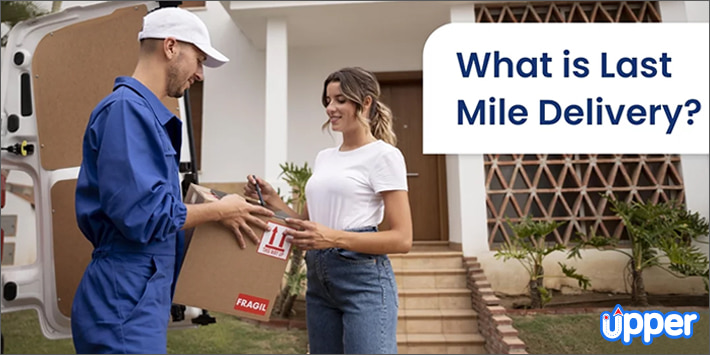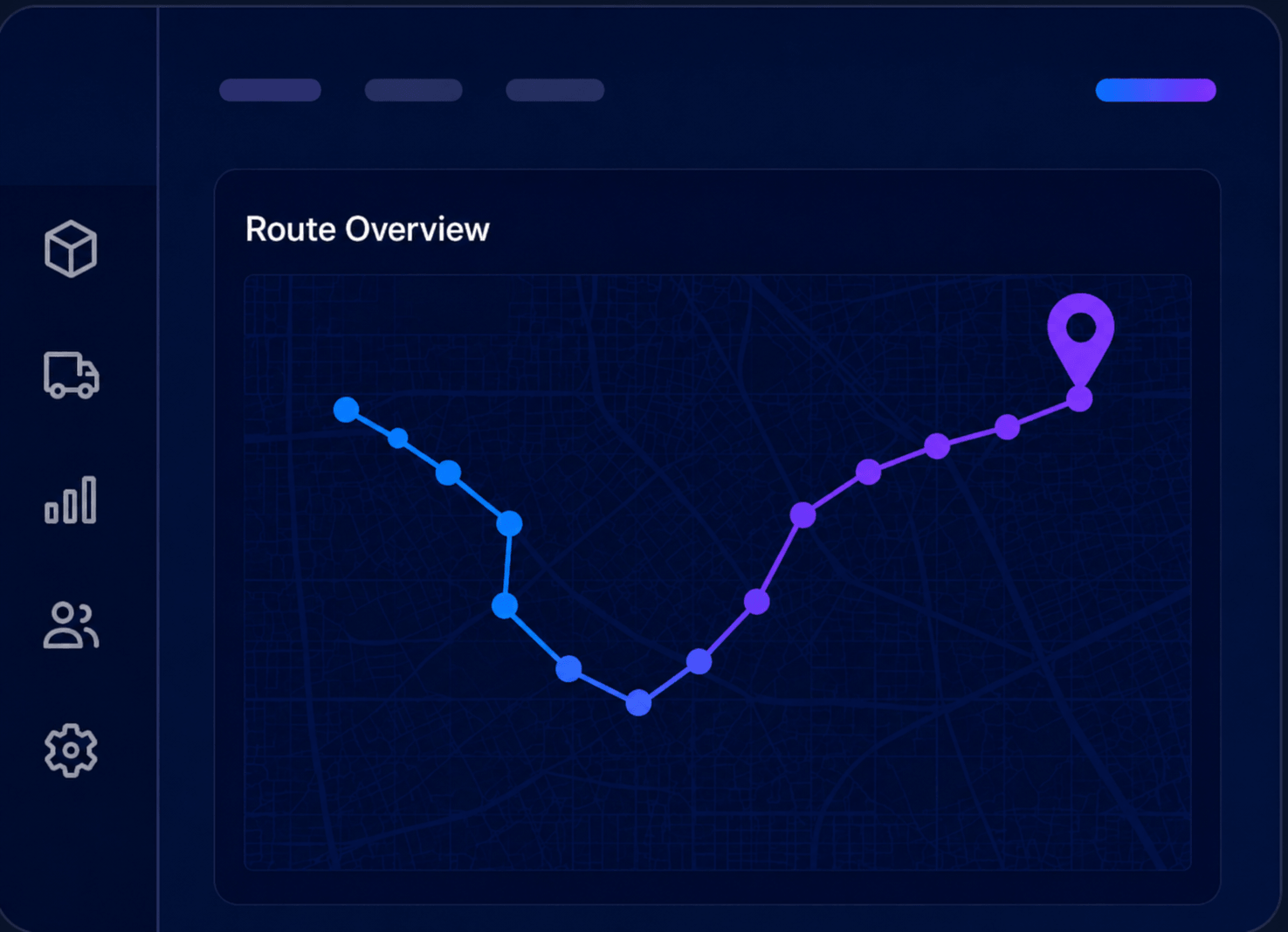

Last-mile delivery is often the most expensive, complex, and customer-sensitive stage of the logistics process. As customer expectations for faster and more flexible deliveries continue to rise, businesses face increasing pressure to manage delivery operations efficiently while controlling costs and maintaining service quality.
According to Grand View Research, the global last-mile delivery market size was estimated at USD 167.36 billion in 2025 and is projected to reach USD 348.85 billion by 2033, highlighting the rapid growth and operational complexity of the industry.
From traffic congestion and failed deliveries to rising fuel costs and driver shortages, last-mile delivery comes with several challenges that directly impact profitability and customer satisfaction. Companies that fail to optimize their last-mile operations often struggle with delayed deliveries, inefficient routes, poor visibility, and rising operational expenses.
In this guide, we’ll explore the 6 biggest last-mile delivery challenges businesses face today, along with the strategies to solve them. Learn how to improve delivery efficiency, reduce costs, and deliver better customer experiences.
Table of Contents
6 Last-Mile Delivery Challenges and How to Solve Them
Last-mile delivery challenges tend to compound. A routing problem leads to late deliveries, which leads to failed attempts, which drives up costs and erodes customer trust. Solving them requires addressing each one systematically, starting with the problems that have the biggest financial impact.
Challenge #1: Rising Delivery Costs and Fuel Waste
Delivery costs are the most visible drain on last-mile profitability. When routes are not optimized, drivers burn excess fuel and spend unnecessary hours on the road.
The Cost Impact
Inefficient routing burns excess fuel and extends driver hours. A 10-driver fleet running unoptimized routes wastes two to three hours per driver daily on unnecessary miles and backtracking. For a 50-vehicle fleet, fuel and operating costs from poor route sequencing can account for more than $145,000 annually.
Labor costs compound the problem further. Overtime from extended routes, plus the cost of additional drivers to cover capacity gaps, pushes the total cost of poor routing well beyond fuel alone. Learning how to reduce last-mile delivery costs starts with understanding where these costs originate.
How to Solve It
Implement route optimization that factors in traffic, stop density, time windows, and vehicle capacity. Algorithmic routing calculates the most efficient stop sequence for each driver, eliminating the guesswork that creates wasted miles.
Use analytics to track fuel consumption per route and identify consistently inefficient patterns. Consolidate stops by zone to reduce empty miles between deliveries. Businesses using route optimization software like Upper Route Planner report 25-40% fuel savings and 15-25% more stops per driver daily.
Challenge #2: Failed First-Attempt Deliveries
Failed deliveries represent one of the most expensive and preventable last-mile problems. Every package that does not reach the customer on the first attempt triggers a chain of additional costs.
The Cost Impact
Failed deliveries cost an average of $17.20 per package when you factor in redelivery, customer service, and restocking expenses. Address errors cause 45% of all failed deliveries, making them the single largest contributor to this problem.
At scale, the numbers are staggering. A 5% failed delivery rate on 10,000 daily orders costs approximately $4.5 million annually. Beyond the direct costs, failed deliveries damage customer relationships and increase the causes of late delivery that cascade across your operation.
How to Solve It
Validate addresses at the point of entry before routes are built. Catching errors during the import stage prevents them from becoming failed deliveries on the road.
Send customer notifications with delivery windows and real-time ETAs so recipients are available when the driver arrives. Offer flexible delivery options, including time slots, safe-drop instructions, or pickup alternatives. Capture proof of delivery with photos and signatures to resolve disputes and reduce “not received” claims before they escalate.
Challenge #3: Lack of Real-Time Fleet Visibility
Operating without real-time visibility into your fleet means making reactive decisions instead of proactive ones. Dispatchers who cannot see where drivers are cannot respond effectively to disruptions.
The Cost Impact
Without live tracking, dispatchers cannot reroute drivers around delays or reassign stops when issues arise. Reactive decision-making increases response time to problems by 30 to 45 minutes on average. That delay ripples through the rest of the route, pushing back every subsequent delivery.
Lack of visibility also prevents accurate ETA communication to customers. This drives up “Where is my driver?” calls that burden your support team and frustrate customers. Implementing real-time GPS tracking closes this gap by giving dispatchers and customers the information they need.
How to Solve It
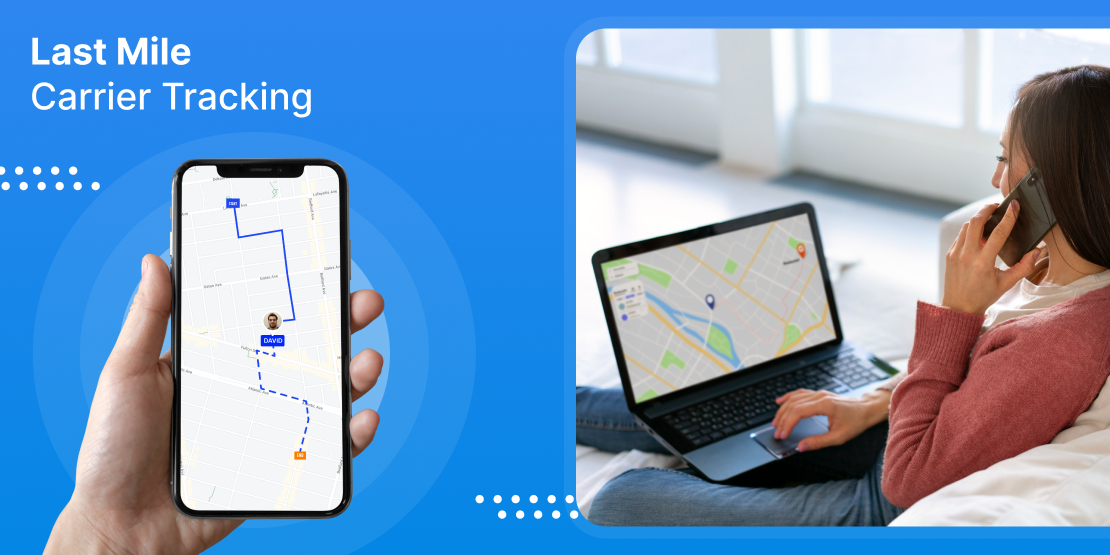
Deploy GPS tracking that shows driver locations in real time, not on a 15-minute delay. Real-time data is the difference between rerouting a driver before a delay becomes a missed delivery and finding out about the problem after the damage is done.
Use geofenced alerts to trigger automatic customer notifications when drivers are approaching. Build dashboards that surface exceptions like late drivers, skipped stops, and route deviations in real time so dispatchers can act immediately.

See it in action
Reduce Failed Deliveries With Proof of Delivery
Capture photos, signatures, and notes at every stop. Upper's proof of delivery eliminates disputes and cuts redelivery costs.

Challenge #4: Driver Shortages and High Turnover
Finding and keeping qualified delivery drivers remains one of the most persistent last-mile delivery challenges. The labor market for commercial drivers has been tight for years, and the trend is not reversing.
The Cost Impact
The U.S. commercial driver shortage reached 78,000 unfilled positions, and the gap continues to grow. Replacing a single driver costs $5,000 to $10,000 in recruiting, training, and lost productivity during the transition.
Overworked drivers on inefficient routes are more likely to quit, creating a cycle of turnover that compounds hiring costs. Each departure means another round of recruitment, another period of reduced capacity, and another drop in service quality while the new driver gets up to speed.
How to Solve It
Balance workloads across drivers so no single driver is consistently overburdened. When one driver handles 50 stops while another handles 20, the imbalance drives burnout and resentment.
Optimize routes to reduce total drive time, giving drivers reasonable schedules that do not require overtime to complete. Provide drivers with intuitive mobile tools that simplify their day rather than adding friction. Track driver performance metrics to identify burnout signals early, so you can intervene before a resignation hits your desk.
Challenge #5: Urban Congestion and Access Restrictions
Urban deliveries present a unique set of obstacles that suburban and rural routes do not face. Traffic congestion, limited loading zones, and regulatory restrictions all increase the cost and complexity of city deliveries.
The Cost Impact
In major metro areas, traffic congestion and limited loading zones increase dwell times by 20-40%. Drivers spend more time circling for parking and waiting in traffic than they do actually delivering.
Low-emission zones, time-based access restrictions, and delivery curfews limit when and how drivers can operate in certain areas. Urban deliveries cost 30-50% more per stop than suburban deliveries due to these constraints. For fleets operating in multiple cities, managing these restrictions across different municipalities adds another layer of planning complexity.
How to Solve It
Use traffic-aware routing that adjusts sequences based on real-time congestion data. Last-mile delivery route optimization that accounts for live traffic patterns keeps drivers moving instead of sitting idle.
Build routes that factor in vehicle type restrictions, time-of-day access windows, and loading zone availability. Schedule urban deliveries during off-peak windows to reduce dwell time and parking challenges. Separating urban and suburban routes and assigning them to drivers familiar with each environment also improves efficiency.
Challenge #6: Meeting Escalating Customer Expectations
Customer expectations for delivery speed, communication, and transparency have risen sharply. What was a differentiator two years ago is now the baseline.
The Cost Impact
Research shows that 41% of online shoppers consider same-day delivery a deciding factor in purchase decisions. Customers are not just hoping for fast delivery. They are choosing where to spend their money based on it.
The transparency gap is equally critical. Roughly 61% of customers will abandon a purchase if real-time tracking or delivery updates are not available. Each missed expectation increases the likelihood of negative reviews, returns, and customer churn. For fleets, meeting these expectations is not optional. It is a competitive requirement. Understanding how customer notifications reduce calls helps quantify the impact.
How to Solve It
Automate customer notifications at key milestones: dispatched, en route, arriving soon, and delivered. Provide branded tracking pages with live driver location and accurate ETAs so customers can plan around their delivery.
Capture and share proof of delivery instantly so customers have confirmation without needing to call support. These steps reduce inbound support volume while simultaneously improving customer satisfaction and first-attempt delivery success rates.
These six challenges rarely exist in isolation. Solving one often reduces the severity of others. The next step is building an operational framework that addresses them together.
See it in action
Track Every Driver in Real Time
Upper's GPS tracking shows exact driver locations, route progress, and ETAs on a live map. No more guessing where your fleet is.
How to Build a Resilient Last-Mile Operation
Solving last-mile challenges one at a time creates patchwork improvements that do not hold up under pressure. A resilient operation requires a systems approach that connects planning, execution, visibility, and continuous improvement into a cohesive workflow.
Start With Route Optimization as the Foundation
Route optimization is the single highest-impact lever for last-mile efficiency. It reduces fuel costs, shortens driver hours, increases stops per route, and improves on-time rates simultaneously.
Without optimized routes, every other improvement is built on an unstable base. Automated route planning replaces the morning scramble with routes generated in under a minute, creating the foundation on which everything else depends.
Layer Real-Time Tracking and Communication
GPS tracking gives dispatchers the visibility to make proactive decisions instead of reacting to problems after they have already caused delays. When a driver hits unexpected traffic or a stop takes longer than planned, dispatchers can see it immediately and adjust.
Automated customer notifications reduce inbound calls and improve delivery success rates by keeping recipients informed. Together, tracking and communication close the gap between planning and execution.
Use Data to Drive Continuous Improvement
Track on-time delivery rates, fuel consumption, driver performance, and failed delivery rates consistently. These are not vanity metrics. They are the operational signals that tell you where your last-mile operation is leaking money.
Identify patterns: which routes consistently underperform, which drivers need support, and which time windows cause the most failures. Use analytics to adjust operations weekly, not quarterly. The fleets that improve fastest are the ones measuring most frequently.
Invest in Driver Experience
Drivers are the human element of last-mile delivery. Their tools, schedules, and workload directly impact every metric you track. Intuitive mobile apps, balanced routes, and clear communication reduce turnover and improve service quality.
Driver retention is cheaper than driver replacement. A fleet that takes care of its drivers maintains more consistent service quality and builds institutional knowledge that makes every route more efficient over time.
A resilient last-mile operation starts with the right foundation in optimized routes, adds visibility through tracking and notifications, measures what matters through analytics, and takes care of the people doing the work. The right technology stack makes this achievable.
Solve Last-Mile Delivery Challenges With Upper
Last-mile delivery challenges cost fleets thousands in wasted fuel, failed deliveries, and lost customers every month. The businesses that solve these challenges systematically gain a measurable competitive advantage in cost efficiency, customer satisfaction, and driver retention.
Upper addresses these challenges at the source. Route optimization eliminates inefficient sequencing and reduces fuel costs by 25-40%. Real-time GPS tracking gives dispatchers full visibility into driver locations, route progress, and ETAs from a single dashboard. Automated customer notifications cut “where is my driver?” calls and improve first-attempt delivery success. Proof of delivery with photo and signature capture resolves disputes before they escalate into chargebacks or lost accounts.
For last-mile fleets, Upper replaces the morning scramble of manual route planning with optimized routes generated in under a minute. Dispatch your entire fleet from one dashboard, track every driver in real time, and capture delivery confirmation at every stop. The analytics dashboard surfaces which routes underperform, which drivers need support, and where costs are leaking, so you can improve operations weekly instead of guessing at quarterly reviews.
Book a demo to see how Upper can reduce your last-mile delivery costs and help your fleet deliver more with less.



)