
If you are managing a delivery fleet without knowing where your drivers are or which stops are completed, you are operating with a blind spot that costs real money. Today, businesses are investing in real-time fleet visibility to close the gap between guessing and knowing.
The cost of that blind spot shows up every day. Missed time windows, reactive dispatch decisions, and constant “where is my driver?” calls from customers drain dispatcher time and erode margins. Industry surveys show that 43% of fleet managers say their tracking systems fail to deliver actionable data beyond basic location, meaning they have dots on a map but no operational intelligence to act on.
This guide covers what real-time fleet visibility actually means, the core technologies behind it, how to implement it without heavy infrastructure investment, and the operational gains fleets report after adopting it. Get a clear framework for building full operational visibility into your fleet. You can also explore how to track delivery vehicles in real time to see this concept in action.
Table of Contents
- What Is Real-Time Fleet Visibility
- Why Delivery Operations Need Fleet Visibility in Real Time
- How to Achieve Real-Time Fleet Visibility for Your Fleet
- Common Challenges With Real-Time Fleet Visibility
- Best Practices for Maximizing Fleet Visibility
- Gain Real-Time Fleet Visibility With Upper
- FAQs on Real-Time Fleet Visibility
What Is Real-Time Fleet Visibility
Real-time fleet visibility is the ability to monitor vehicle locations, route progress, driver status, and delivery outcomes from a centralized dashboard, updated continuously. It goes beyond passive tracking or checking locations after the fact.
Where basic GPS shows dots on a map, real-time fleet visibility delivers operational context: which stops are completed, whether drivers are ahead or behind schedule, and how ETAs are shifting based on actual conditions.
The distinction between real-time and delayed data matters more than most fleet managers realize. Systems that update every 15 minutes create a false sense of control. By the time you see a driver is off route or behind schedule, the problem has already compounded. True real-time fleet visibility means continuous data flow that enables immediate decisions.
Understanding the concept of real-time fleet visibility is the starting point. The real question is what this visibility enables for fleet operations and the bottom line.
Why Delivery Operations Need Fleet Visibility in Real Time
Fleet visibility is not a nice-to-have technology add-on. It is a core operational capability that directly impacts fuel costs, on-time performance, customer satisfaction, and dispatcher productivity. The data backs this up across every metric that matters to delivery businesses.
Reduced Fuel Costs and Wasted Miles
Fleets using real-time tracking report 20-30% fuel savings through better route adherence and idle time reduction. When dispatchers can see a driver sitting idle or deviating from the planned route, they can intervene immediately rather than discovering the waste at the end of the day.
Excessive idling drops by up to 30% with alert-based monitoring, and dispatchers can reroute drivers around traffic or construction in real time, eliminating unnecessary miles before they happen.
Higher On-Time Delivery Rates
Real-time fleet visibility enables proactive intervention when drivers fall behind schedule. Instead of learning about a missed time window after the fact, dispatchers can reassign stops or adjust routes while there is still time to recover.
Logistics companies using real-time tracking and route optimization have increased on-time deliveries to 98%. Accurate ETAs shared with customers also reduce failed delivery attempts because recipients know exactly when to expect their delivery.
Fewer “Where Is My Driver?” Calls
Customer-facing tracking links let recipients check delivery status themselves, eliminating the need to call your dispatch team. Businesses report significant reductions in inbound support calls after enabling automated customer notifications and live tracking pages.
This frees up dispatchers to manage operations instead of answering the same status question dozens of times per day. When customers can answer their own question about where are my drivers, your team gets that time back.
Improved Driver Accountability and Safety
Real-time alerts for harsh braking, speeding, and route deviations give fleet managers visibility into driver behavior without requiring ride-alongs. Fleets with visibility programs report up to 40% reduction in accidents because risky behavior gets addressed early.
Unauthorized vehicle use drops by up to 15% with continuous tracking, and drivers who know their routes are monitored tend to follow them more consistently.
These benefits compound. A fleet that saves on fuel, hits more time windows, and handles fewer status calls is fundamentally more profitable. The next step is understanding how to build this visibility into your operation.

See it in action
See Your Fleet in Real Time With GPS Tracking
Upper shows every driver’s location, route progress, and ETA on a single live map. No hardware, no contracts.

How to Achieve Real-Time Fleet Visibility for Your Fleet
Achieving real-time fleet visibility does not require a six-figure technology investment or months of implementation. A smart fleet management software works through smartphone apps, cloud dashboards, and automated workflows that connect in minutes rather than months. Here is a step-by-step approach that fleet managers can follow to go from blind spots to full operational awareness.
Choose Your Tracking Foundation
The first decision is how you will collect location data from your fleet. This choice shapes your implementation timeline, ongoing costs, and the type of visibility you get.
Smartphone-Based GPS Tracking
Smartphone-based tracking uses the GPS chip already built into your drivers’ phones. A mobile app runs in the background, transmitting location data to a cloud dashboard at regular intervals.
There is no hardware to buy, install, or maintain. For delivery and field service fleets focused on route visibility and proof of delivery, smartphone GPS accuracy is comparable to dedicated devices. You can explore fleet tracking without hardware to see how this approach works in practice.
Dedicated Telematics Devices
OBD-II plug-in or hardwired telematics units connect directly to the vehicle. They provide vehicle diagnostics, engine health monitoring, and driver behavior scoring beyond what smartphone GPS offers. The trade-off is a higher upfront cost and ongoing maintenance. Telematics is best suited for fleets that need fuel monitoring, maintenance alerts, and compliance reporting alongside location tracking.
Which Approach Fits Your Fleet
Smartphone tracking fits delivery and field service fleets focused on route management, stop tracking, and proof of delivery. Telematics fits fleets requiring vehicle health data and compliance documentation.
Many fleets use both: a smartphone app for daily route management plus telematics for vehicle diagnostics. The key is matching the technology to your operational priorities rather than defaulting to the most expensive option.
Set Up Your Centralized Dashboard
Once you have location data flowing, the next step is building a dashboard that turns raw data into actionable intelligence.
Map View With Route Overlays
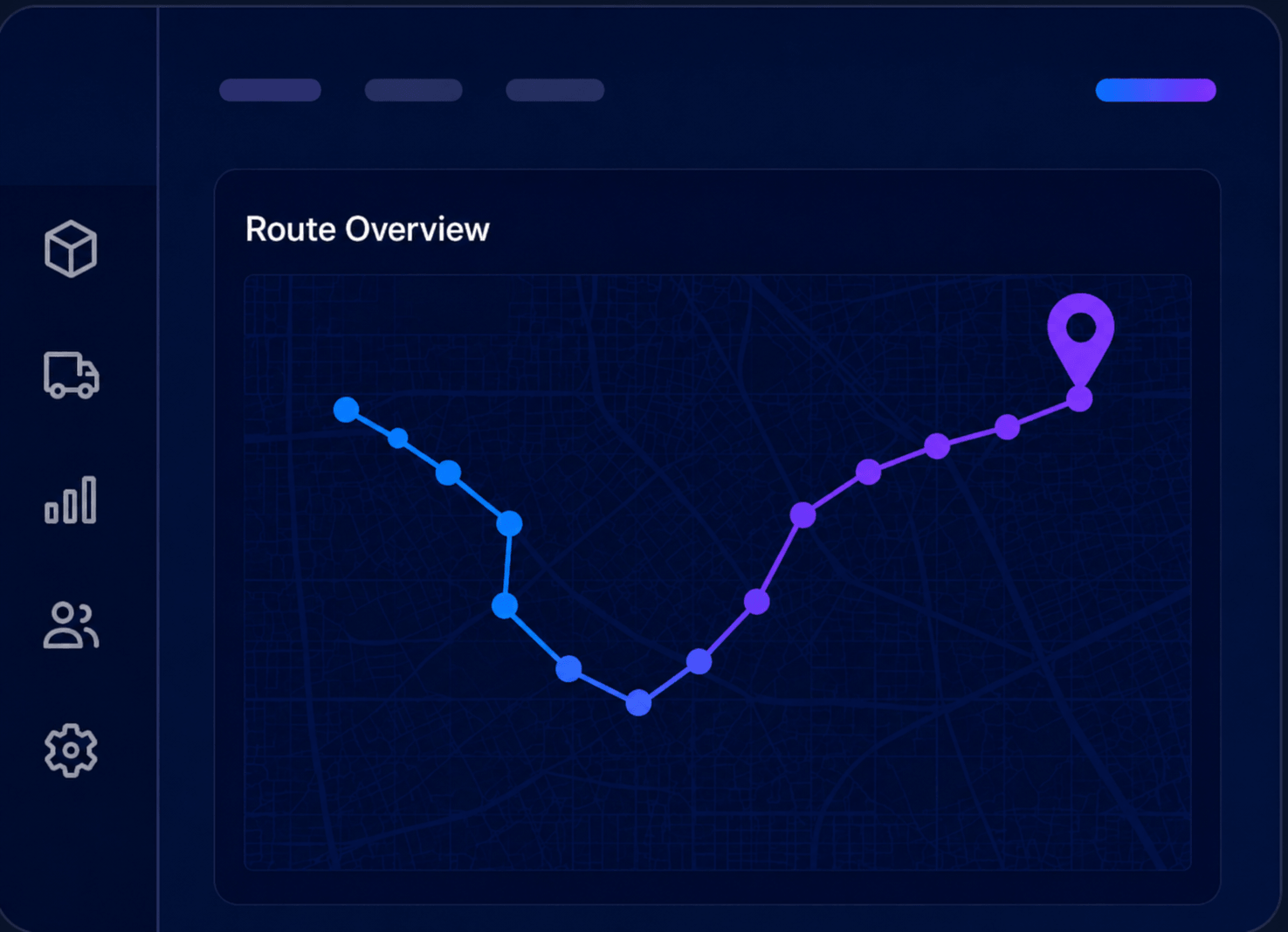
A centralized map view shows all drivers on a single screen with their assigned routes overlaid. Color-coded status indicators show which drivers are on track, which are behind, and which have completed their routes. Clicking into any driver reveals stop-by-stop progress, time at each stop, and current ETA for remaining deliveries.
Key Metrics to Display
The most useful dashboards surface five core metrics: active drivers and current locations, stops completed versus stops remaining, on-time performance percentage, ETA accuracy for upcoming deliveries, and idle time or route deviation alerts. Focus on exception-based views that highlight problems rather than drowning dispatchers in routine data.
Connect Visibility to Dispatch Workflows
Real-time fleet visibility creates the most value when it connects directly to dispatch operations. Tracking in isolation tells you where drivers are. Tracking connected to driver dispatch management tells you what to do about it.
Real-Time Route Adjustments
When a driver falls behind schedule, dispatchers can reassign stops to nearby drivers without rebuilding entire routes. Last-minute orders can be inserted into the nearest driver’s route based on live location and real-time route optimization. Cancellations free up capacity that dispatchers can reallocate immediately. This transforms dispatch from a morning-only activity into a continuous optimization loop.
Automated Alerts and Escalations
Set thresholds for late arrivals, excessive idle time, or route deviations, and let the system push alerts to dispatchers. This replaces the need for constant dashboard monitoring with proactive notifications. Escalation rules for critical time windows, such as medical deliveries or perishable goods, ensure high-priority issues get attention first.
Enable Customer-Facing Visibility
Internal visibility is only half the equation. The highest-performing delivery operations extend that visibility to their customers.
Live Tracking Links
Automated SMS or email notifications send customers a tracking link when a driver is en route. Customers see the driver’s real-time location and ETA on a branded tracking page. This self-service visibility reduces “where is my delivery?” calls by giving customers the answer before they pick up the phone. Platforms with delivery notification software automate this process without adding work for dispatchers or drivers.
Automated Delivery Notifications
Status-based triggers send updates at each stage: dispatched, on the way, arriving soon, delivered. Estimated arrival windows update based on actual driver progress rather than static predictions. Post-delivery confirmation includes proof of delivery with photo, signature, or notes, closing the loop for both the business and the customer.
Capture and Use Delivery Data
Real-time fleet visibility generates valuable data. The fleets that benefit most are the ones that capture and use it.
Proof of Delivery Documentation
Drivers capture photos, signatures, and notes at each stop through the mobile app. This creates a searchable, timestamped record tied to each delivery that eliminates disputes and supports compliance documentation. Proof of delivery software turns every completed stop into a verified, documented event.
Performance Analytics
Track trends in on-time rates, route efficiency, and driver productivity over time. Identify patterns: which routes consistently run late, which drivers complete more stops, and where service time estimates need adjustment. Feed this data back into route planning to continuously improve future performance.
Train Your Team for Adoption
Technology only works if your team uses it. The way you introduce fleet visibility to drivers determines whether they embrace it or resist it.
Focus on Benefits, Not Surveillance
Frame tracking is a tool that protects drivers through accident documentation and workload balance, not as a surveillance system. Highlight how optimized routes reduce drive time and stress. Fleets that introduce tracking with a benefits-first approach report 85% driver acceptance rates.
Transparent communication about what is tracked and how data is used builds trust. For more on this approach, see how fleet driver accountability software can support both managers and drivers.
Start Simple, Then Expand
Begin with location tracking and route progress. Add customer notifications and proof of delivery once the team is comfortable with the basics. Layer in analytics and performance benchmarks after 30-60 days of baseline data. This progressive approach avoids overwhelming drivers with too many changes at once.
Implementation does not need to happen all at once. Fleets that start with core tracking and progressively add dispatch integration, customer visibility, and analytics see the fastest adoption and the strongest ROI. The next consideration is understanding what challenges to expect along the way.
See it in action
Capture Photo and Signature Proof at Every Stop
Upper’s mobile app lets drivers document every delivery with photos, signatures, and notes, creating a complete digital record.
Common Challenges With Real-Time Fleet Visibility
No technology rollout is without friction. Fleet visibility implementations face a handful of common obstacles that, left unaddressed, can slow adoption or limit the value you get from the system. Here are the most frequent challenges and how to handle them.
Driver Resistance and Privacy Concerns
Some drivers view tracking as surveillance, especially those who have operated independently for years. This resistance can slow adoption or lead to workarounds like leaving phones at stops.
Solution: Transparent communication about what is tracked, why, and how data is used. Emphasize safety and workload benefits. When drivers understand that tracking protects them in accident situations and ensures fair workload distribution, resistance typically drops within the first two weeks.
Data Overload Without Actionable Insights
Continuous data streams from every vehicle can overwhelm dispatchers who are trying to manage active routes. Raw location data without context creates noise rather than clarity.
Solution: Configure alerts and thresholds rather than monitoring raw feeds. Focus dashboards on exceptions: drivers who are behind, stops that are at risk, and vehicles that have been idle too long. Exception-based views turn data into decisions.
Connectivity Gaps in Remote Areas
GPS tracking depends on cellular coverage, and rural delivery routes may pass through areas with weak or no signal. Brief gaps can create concern about tracking reliability.
Solution: Most modern apps cache data offline and sync when connectivity returns. Rural delivery routes may see brief real-time gaps, but the full route history is preserved once the device reconnects. This means you lose live tracking temporarily but never lose the data.
Integration With Existing Systems
Fleet visibility tools need to connect with dispatch, CRM, and scheduling systems to deliver full value. Standalone tracking tools that cannot share data with other platforms create silos.
Solution: Prioritize platforms with native integrations or API access. Avoid standalone tracking tools that force your team to switch between multiple screens. The most effective fleet visibility systems work within your existing workflow, not alongside it.
Each of these challenges has a well-tested solution. The fleets that succeed with visibility treat implementation as a change management process, not just a technology deployment. That mindset extends into how you optimize your visibility setup over time.
Best Practices for Maximizing Fleet Visibility
Installing a tracking system is the starting point, not the finish line. The fleets that extract the most value from real-time fleet visibility follow a set of operational practices that turn data into decisions.
Review Key Metrics Daily
Set a daily dispatch routine: check on-time rates, idle time, and route adherence before the morning’s routes go out. Identify outliers and address them the same day rather than letting patterns build over weeks. Weekly trend reviews using your fleet management dashboard help you spot systemic issues that daily checks miss.
Use Visibility Data to Optimize Routes
Compare planned versus actual route performance to identify where your planning assumptions break down. Look for stops that consistently cause delays due to access issues, long service times, or inaccurate time window estimates. Feed historical data back into route optimization to improve future planning rather than repeating the same inefficiencies.
Share Visibility With Customers Proactively
Enable automated tracking links as a standard for every delivery, not an exception for VIP customers. Set customer expectations with accurate ETAs rather than broad two-hour windows. Use delivery confirmations to close the loop and build trust. Proactive communication reduces inbound calls and differentiates your service from competitors who leave customers guessing.
Benchmark and Improve Continuously
Target specific metrics: on-time delivery rate above 95%, idle time below 10%, route adherence above 90%. Compare driver performance to identify coaching opportunities, not just top performers. Review monthly to track improvement trends and adjust targets as your operation matures. Top-performing fleets treat these benchmarks as a floor to build from, not a ceiling to reach.
These practices transform fleet visibility from a passive monitoring tool into an active operational advantage. The technology matters, but the operational discipline around it determines whether you see incremental or transformative results.
See it in action
Optimize Routes With Real-Time Performance Data
Upper’s Smart Analytics tracks on-time rates, route efficiency, and driver productivity so you can improve every week.
Gain Real-Time Fleet Visibility With Upper
Real-time fleet visibility eliminates the blind spots that cost delivery fleets time, fuel, and customer trust. From knowing exactly where every driver is to capturing proof at every stop, visibility is the foundation that every other operational improvement builds on.
Upper provides real-time GPS tracking through drivers’ smartphones, eliminating the need for hardware installation or telematics contracts. Fleet managers see every driver, every route, and every delivery on a single dashboard with live map views and route overlays. Stop-by-stop progress tracking shows exactly where each driver stands against their planned schedule.
Beyond tracking, Upper connects visibility to the tools that make it actionable. Automated customer notifications with live tracking links keep recipients informed without adding work for your team. Proof of delivery with photo and signature capture creates a verified record at every stop.
Upper scales from solo drivers with Upper Solo to multi-driver fleets with Upper Crew, so visibility grows with your business. Whether you are building fleet visibility from scratch or replacing a system that gives you dots on a map without operational intelligence, Upper delivers the complete picture.
Book a demo to see how Upper gives your fleet complete real-time visibility from dispatch to delivery confirmation.
FAQs on Real-Time Fleet Visibility
Smartphone-based fleet tracking uses the GPS chip already built into drivers’ phones. A mobile app runs in the background, transmitting location data to a cloud dashboard at regular intervals. This approach eliminates the cost and complexity of installing dedicated telematics devices while providing accurate real-time fleet visibility for delivery and field service operations.
The primary benefits include 20-30% fuel savings through better route adherence, higher on-time delivery rates where top fleets reach 95-98%, fewer customer status calls through automated tracking links, improved driver safety with behavior alerts, and data-driven route optimization. These gains compound to reduce operating costs and increase delivery capacity.
Costs vary based on fleet size and features. Smartphone-based solutions typically range from $20-60 per driver per month with no hardware costs. Telematics-based systems add $15-30 per vehicle per month for hardware plus a software subscription. For small to mid-size delivery fleets, smartphone-based real-time fleet visibility offers the strongest ROI.
Yes. Most modern fleet visibility platforms include customer-facing tracking links. When a driver is dispatched, the system sends an automated SMS or email with a live tracking link. Customers see driver location and updated ETA on a branded tracking page, reducing inbound “where is my delivery?” calls.
Smartphone-based fleet visibility solutions can be operational within a day. Upload your stops, invite your drivers to download the mobile app, and start tracking. No IT integration, hardware installation, or complex configuration required. Most teams are fully operational within the first week.
Focus on five core metrics: on-time delivery rate with a target above 95%, idle time percentage with a target below 10%, route adherence with a target above 90%, stops completed per driver per day, and customer satisfaction scores. Review these daily for operational decisions and weekly for trend analysis and route optimization improvements.