
If you’re looking into how to scale last-mile delivery, chances are your current operation works at its present size but starts breaking when you add more drivers, stops, or delivery zones. Every new driver and vehicle adds complexity that manual processes cannot absorb, and costs spiral faster than revenue.
As per Grand View Research, the global last-mile delivery market size was estimated at USD 132.71 billion in 2022 and is anticipated to reach USD 258.68 billion by 2030. That growth means more competition, tighter margins, and higher customer expectations for every delivery business trying to scale.
In this guide, you’ll learn:
- What separates scaling from simply growing a delivery operation
- A six-step framework for scaling from 5 drivers to 50+ without crushing margins
- The KPIs that predict whether your operation is ready to grow
- Common mistakes that cause delivery businesses to stall at 15 to 20 drivers
Table of Contents
- What Scaling Last-Mile Delivery Actually Means
- Why Scaling Your Last-Mile Delivery Operations Pays Off
- A Proven Framework for Scaling Last-Mile Delivery Operations
- Common Challenges In Scaling Last-Mile Delivery Operations
- Last-Mile Delivery Scaling Mistakes to Avoid
- Best Practices for Sustainable Delivery Fleet Scaling
- Scale Your Last-Mile Delivery Operations With Upper
- Frequently Asked Questions
What Scaling Last-Mile Delivery Actually Means
Most delivery businesses assume scaling means hiring more drivers and buying more trucks. In reality, scaling your last-mile delivery operation means increasing delivery volume while holding or reducing your cost per delivery.
Scaling vs. Growing: Why the Difference Matters
Growing adds resources and revenue in a linear relationship. You add one driver, you handle one driver’s worth of additional stops. Scaling breaks that pattern by adding volume at a rate that outpaces cost increases. For delivery businesses, this means more stops per route, more deliveries per driver, and more revenue per dollar spent on fuel and labor.
The Three Scaling Walls Every Delivery Business Hits
The first wall hits around 10 drivers, when manual route planning becomes a daily bottleneck. The second appears at roughly 25 drivers, when dispatcher capacity maxes out. The third emerges at 50+ drivers, when data visibility gaps and untracked performance metrics cause cost overruns.
What a Scalable Delivery Operation Looks Like
A scalable operation has automated route planning that handles increasing stop counts without proportional planning time, standardized dispatch workflows that do not depend on a single person, and performance data that surfaces bottlenecks before they crush margins.
With the definition clear, the next question is why getting this right delivers outsized returns for your business.
Why Scaling Your Last-Mile Delivery Operations Pays Off
When your delivery infrastructure supports volume growth without proportional cost increases, the financial, operational, and competitive benefits compound over time.
Lower Cost Per Delivery as Volume Increases
A delivery business running 100 stops per day across optimized routes can add 50 more stops with minimal additional cost, because the route structure and dispatch process already absorb growth. Route optimization reduces travel distance by 15-30%, and those savings grow larger as stop counts increase.
Faster Delivery Windows That Win Repeat Customers
Scaled operations complete more deliveries in less time because routes are tighter and stops are clustered efficiently. When customers consistently receive packages within the promised time frame, reorder rates increase, and support call volume drops.
Higher Driver Utilization Without Burnout
Workload balancing distributes stops evenly across available drivers, so no single driver is running 60 stops while another handles 25. Higher utilization means more revenue per driver hour, and balanced workloads reduce turnover, one of the most expensive hidden costs in delivery operations.
Competitive Positioning Against Larger Carriers
Small and mid-size delivery businesses that scale efficiently can compete on speed, reliability, and service quality with carriers many times their size. Route density and operational agility become advantages when the underlying systems support consistent execution.
The benefits are clear, but achieving them requires a structured approach. The following framework breaks the scaling process into six actionable steps.

See it in action
Upper Plans Routes for 500+ Stops in Under a Minute
Route optimization is the foundation of every scalable delivery operation. Upper's routing engine handles growing stop counts without adding planning time.

A Proven Framework for Scaling Last-Mile Delivery Operations
This six-step framework works for delivery businesses at any stage. Each step builds on the previous one, and skipping steps creates gaps that surface as costly problems at higher volumes.
Step 1: Build a Route Optimization Foundation
Route optimization is the single most impactful investment for scaling delivery operations. Manual route planning breaks at roughly 10-15 drivers. Algorithmic routing reduces miles driven by 15-30% and cuts fuel costs by up to 20%.
Moving From Manual Planning to Algorithm-Driven Routes
Instead of a dispatcher spending two hours plotting stops on a map, route optimization software takes your full stop list, factors in traffic, time windows, and vehicle constraints, and generates optimized routes in minutes. This frees your dispatcher to manage exceptions instead of building routes from scratch.
Measuring Route Efficiency With Cost Per Stop
Track total route cost (fuel, driver time, vehicle wear) divided by completed stops. A declining cost per stop as volume increases confirms your operation is scaling, not just growing.
Step 2: Standardize Driver Dispatch and Communication
As fleets grow, dispatchers become bottlenecks. Standardized dispatch workflows eliminate the dependency on one person holding all routing knowledge.
Automating Driver Assignment Based on Capacity and Location
Automated assignment matches stops to drivers based on location, vehicle capacity, and availability. This ensures balanced workloads and prevents overloading experienced drivers while new hires sit idle.
Real-Time Updates That Eliminate Phone-Tag Dispatching
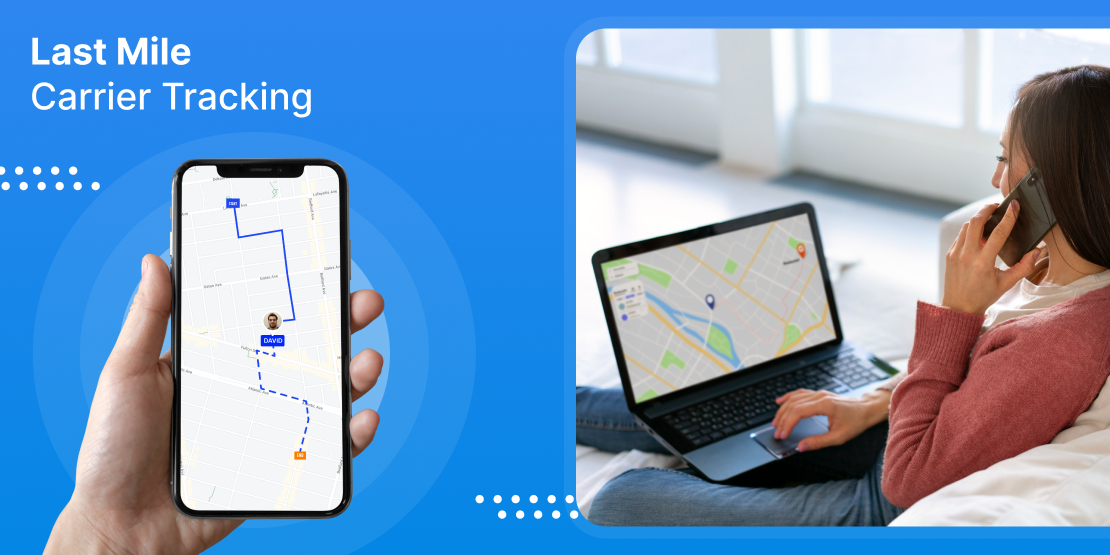
A centralized platform replaces phone calls and missed updates. Drivers receive route changes instantly, dispatchers see progress without calling, and customers get automated status updates.
Step 3: Implement Capacity Optimization Across Your Fleet
Capacity optimization ensures every vehicle carries the maximum profitable load. Half-empty vehicles are the hidden cost of scaling poorly; each truck running at half capacity doubles your effective cost per delivery.
Vehicle Load Planning for Maximum Stops Per Route
Matching package dimensions, weight limits, and delivery sequence to vehicle capacity reduces the total number of routes needed and maximizes the return on each trip.
Time-Window Clustering to Increase Stop Density
Grouping deliveries with similar time windows into geographic clusters increases stops per hour. Instead of zigzagging across a delivery zone, drivers work through dense clusters of nearby stops.
Step 4: Use Data and Analytics to Find Bottlenecks
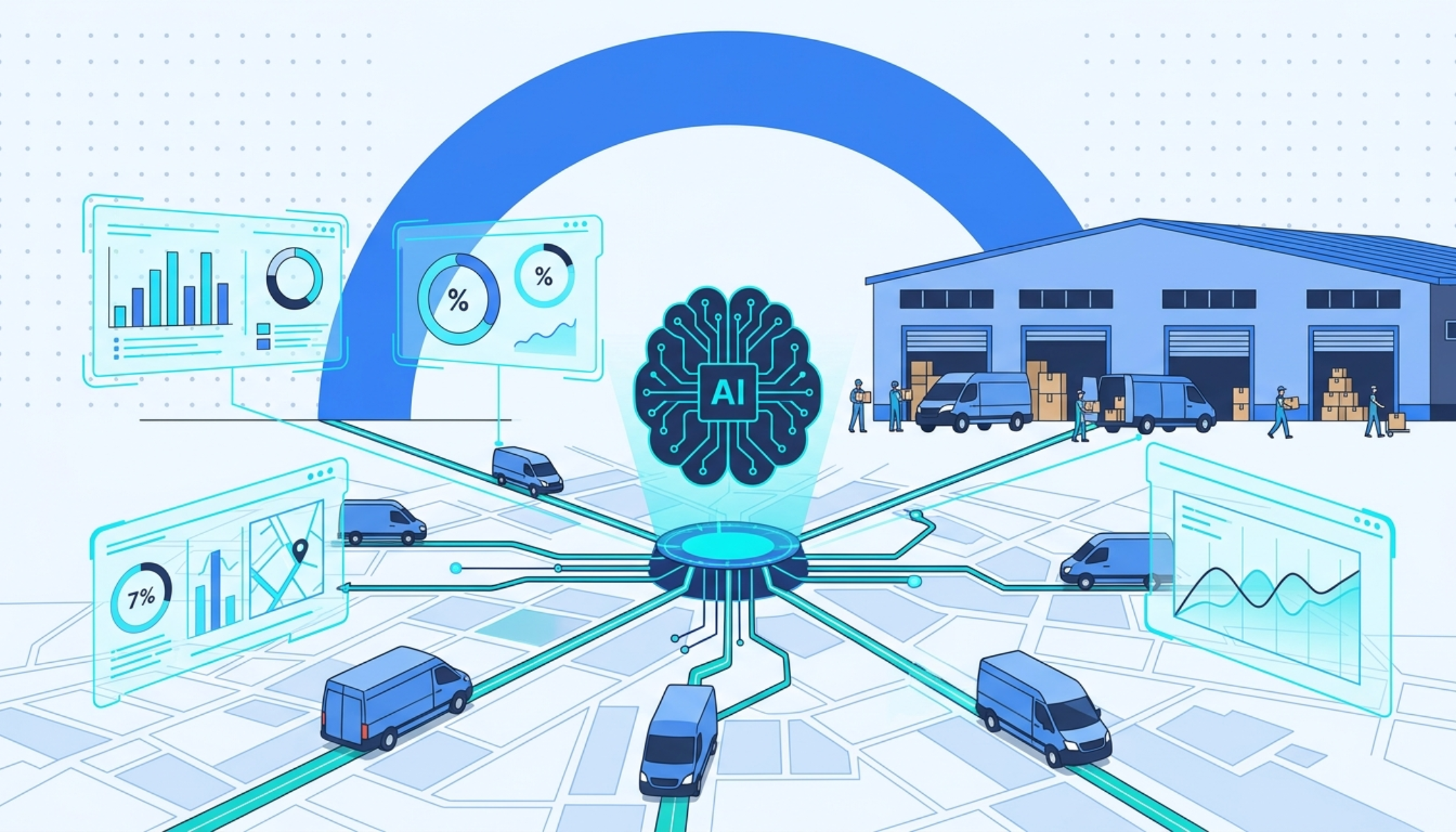
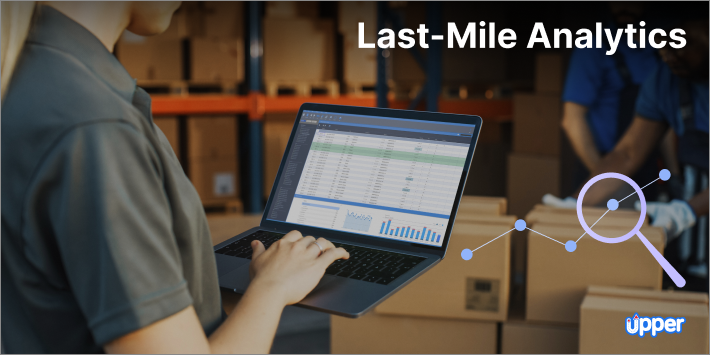
Scaling without visibility is flying blind. Analytics dashboards surface the 20% of routes causing 80% of cost overruns, so you can fix problems before they compound.
The Six KPIs That Predict Scaling Readiness
Track these six metrics: cost per delivery, on-time delivery rate, stops per hour, fuel cost per route, failed delivery rate, and driver utilization percentage. When all six are stable or improving over a 30-day window, your infrastructure can support additional volume.
Turning Route Data Into Weekly Operational Improvements
Review route-level data weekly. Compare actual drive times against planned times, flag drivers whose cost per stop deviates from the fleet average, and identify zones where failed attempts spike. These weekly reviews create a feedback loop that makes every subsequent week more efficient.
Step 5: Scale Driver Onboarding and Performance Management
Adding productive drivers who match existing performance standards is hard. Without structured onboarding, new hires drag down fleet-wide metrics during ramp-up.
Creating a Repeatable Driver Onboarding Process
Build a standardized checklist covering app training, route familiarization, proof of delivery capture, and communication protocols. New drivers should complete their first optimized route within one day, not one week.
Performance Benchmarks That Hold Quality at Scale
Set clear benchmarks for stops per hour, on-time rate, and proof of delivery completion before adding drivers. When every driver is measured against the same standards, you identify underperformers quickly.
Step 6: Layer In Customer Communication and Proof of Delivery
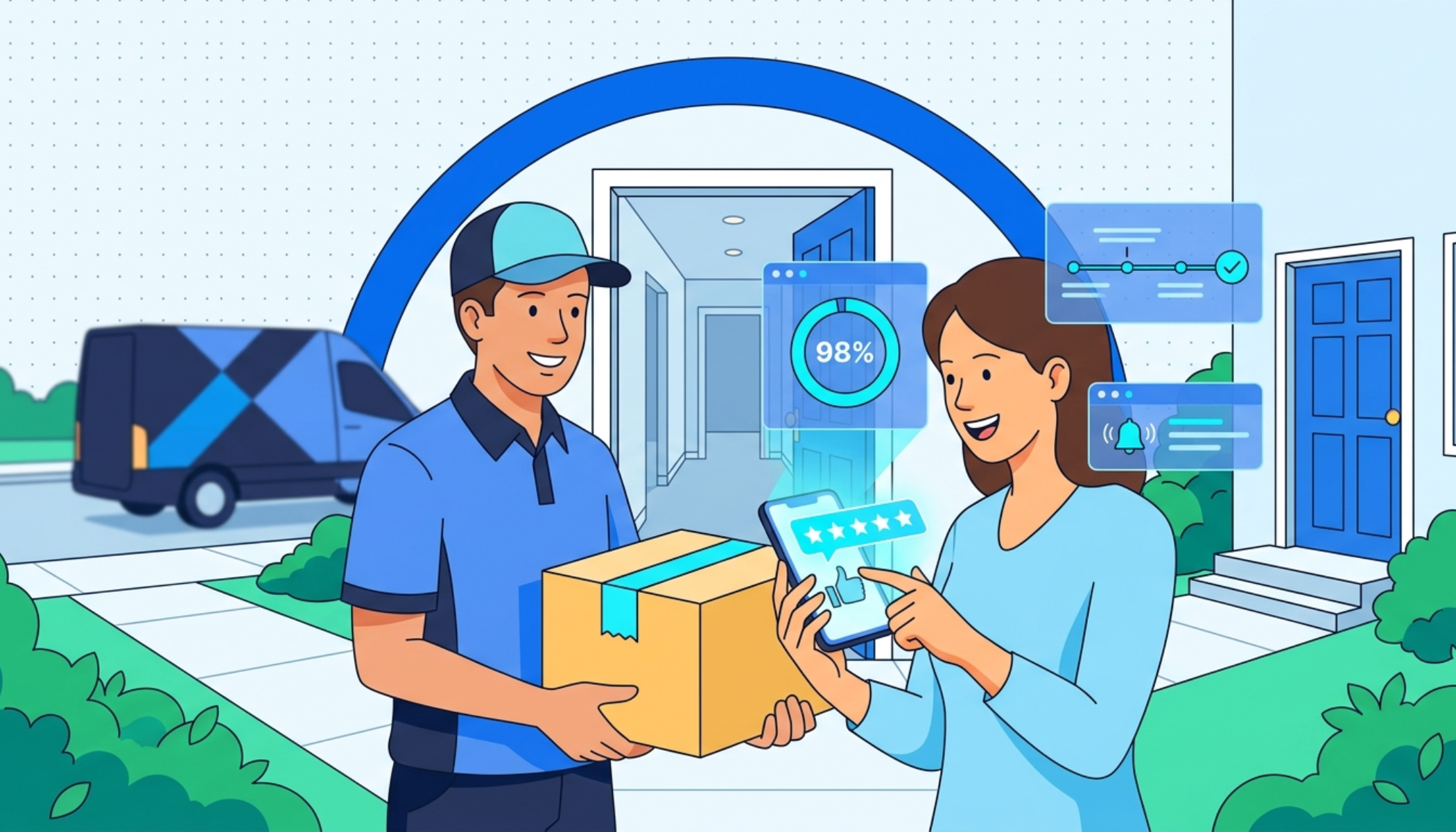
At scale, customer service becomes a cost center if the delivery status is opaque. Automated customer notifications and digital proof of delivery reduce inbound support volume by 30-40% while improving satisfaction scores.
Automated Notifications That Reduce Support Volume
Automated SMS and email notifications triggered by route events keep customers informed without dispatcher involvement. For a fleet handling 500+ deliveries per day, this eliminates hundreds of inbound calls weekly.
Digital Proof of Delivery for Accountability at Scale
Photos, signatures, and timestamped notes captured at each stop create an auditable record that resolves disputes instantly. Without it, even a 2% dispute rate on 1,000 daily deliveries generates 20 daily cases requiring manual investigation.
These six steps work as a system. When all are in place, your operation can handle 2-3x your current volume.
See it in action
Track Cost Per Delivery, On-Time Rates, and Driver Performance
Upper's analytics dashboard gives you real-time visibility into the KPIs that determine whether your fleet is ready to grow.
Common Challenges In Scaling Last-Mile Delivery Operations
Scaling is not a straight line. Every delivery business that grows past 15-20 drivers encounters predictable friction points. The good news is that these challenges are solvable with the right operational fixes.
Rising Fuel and Vehicle Maintenance Cost
A 50-vehicle fleet running inefficient routes can lose $1.1-$1.4 million annually to avoidable miles and fuel waste. Fuel costs should not increase proportionally with fleet size if routes are optimized. Ensure every new vehicle runs optimized routes from day one.
Failed Deliveries That Compound at Higher Volume
A 5% failed delivery rate at 500 deliveries per day means 25 reattempts, each costing an average of $17.20. Address validation before dispatch and real-time tracking to confirm delivery attempts are the most effective countermeasures.
Dispatcher Overload and Communication Breakdowns
A single dispatcher can manage 8-12 drivers using manual methods. Beyond that, response times slow, and route changes get missed. Centralized dispatch software that automates route distribution solves this.
Maintaining Delivery Quality as You Add New Drivers
Without performance benchmarks and structured onboarding, the quality dip during ramp-up becomes permanent. The framework in Step 5 addresses this by getting new drivers to full productivity in days instead of weeks.
These challenges are predictable, which means they are preventable.
Last-Mile Delivery Scaling Mistakes to Avoid
Most scaling failures come from doing the right things in the wrong order. Delivery businesses that grow successfully avoid these four anti-patterns.
Adding Drivers Before Optimizing Existing Routes
If current routes are not optimized, adding drivers distributes inefficiency across more vehicles. Maximize existing fleet capacity through route optimization first. Many businesses handle 20-30% more volume with their current drivers once routes are properly sequenced.
Skipping Data Collection During the Early Growth Phase
Without KPI baselines from your first growth phase, you have no reference point when problems emerge. Start tracking cost per delivery, on-time rate, stops per hour, fuel cost per route, failed delivery rate, and driver utilization from day one.
Relying on a Single Dispatcher for All Route Decisions
When all routing knowledge lives in one person’s head, that person becomes a single point of failure. Standardize dispatch workflows in software so any team member can manage routes.
Ignoring Customer Experience Until Complaints Spike
Proactive notifications, accurate ETAs, and digital proof of delivery should be in place before you scale, not added as a reaction to rising complaint volumes.
Avoiding these mistakes puts your operation on a solid footing.
Best Practices for Sustainable Delivery Fleet Scaling
These four best practices consolidate the framework’s key principles into actions you can implement today.
Start With Route Optimization Before Hiring More Drivers
Optimized routes extract maximum value from your existing fleet. Fleet management software that combines route optimization with dispatch and tracking gives you the full picture before you commit to new hires.
Set KPI Baselines Before Each Growth Phase
Before adding drivers or delivery zones, document performance across all six KPIs. These baselines become your reference points for measuring whether growth improved or degraded your operation.
Automate Repetitive Tasks at Every Scaling Stage
Route planning, driver assignment, customer notifications, and proof of delivery collection should all be automated before you scale. Automation reduces per-delivery cost and frees your team to manage exceptions.
Build Redundancy Into Dispatch and Driver Coverage
Build redundancy by cross-training team members, maintaining on-call drivers, and using scheduling tools that make route reassignment fast.
With these best practices in place, your delivery operation has the operational discipline to support sustained, profitable growth.
See it in action
Capacity Optimization for Every Vehicle in Your Fleet
Upper's capacity optimization ensures every vehicle runs at peak load, reducing trips and lowering cost per delivery as your fleet grows.
Scale Your Last-Mile Delivery Operations With Upper
The ability to scale last-mile delivery comes down to building the right infrastructure before you add volume. The six-step framework in this guide gives delivery businesses a repeatable path from 5 drivers to 50+ without proportionally increasing costs.
Upper provides the operational foundation that makes each step possible. Route optimization plans efficient routes for your entire fleet in under a minute. Capacity optimization ensures every vehicle runs at peak load.
The analytics dashboard tracks cost per delivery, on-time rates, and driver performance in real time. Automated customer notifications and digital proof of delivery reduce support volume while improving the delivery experience.
Whether you are hitting your first scaling wall at 10 drivers or preparing to push past 50, Upper gives you the tools to grow volume while driving down cost per delivery. Book a demo to see how Upper helps delivery businesses scale without crushing their margins.
Frequently Asked Questions on Scaling Last-Mile Delivery
Most delivery businesses see measurable ROI at five or more drivers. Time savings on daily route planning alone typically cover the software cost. The financial impact grows significantly at 10+ drivers, where manual planning becomes a bottleneck.
Last-mile delivery accounts for approximately 53% of total shipping costs. Within that, fuel and driver labor are the two biggest line items. Route optimization reduces both by cutting unnecessary miles and increasing stops per driver shift.
Small delivery businesses compete by building tighter route density, offering faster delivery windows, and providing a better customer experience through proactive communication. Route optimization and fleet management software give small operations the same efficiency tools that large carriers rely on.
Track six core KPIs: cost per delivery, on-time delivery rate, stops per hour, fuel cost per route, failed delivery rate, and driver utilization percentage. Monitor these weekly and establish baselines before each growth phase. Stable or improving metrics indicate your operation can absorb additional volume.
Route optimization algorithms calculate the most efficient stop sequence, factoring in distance, traffic, time windows, and vehicle capacity. This reduces total miles driven by 15-30%, cuts fuel costs by up to 20%, and increases stops per driver shift.